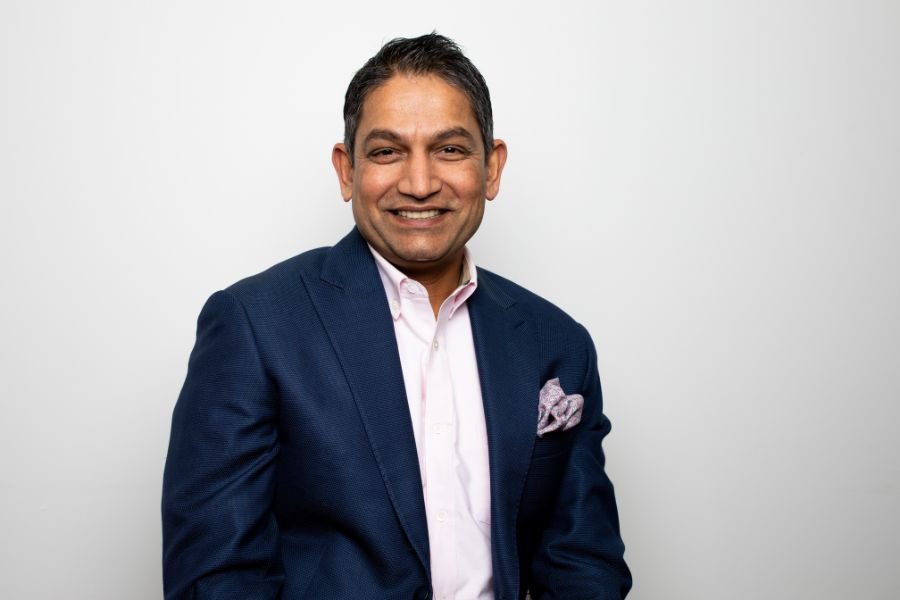
Milind Mehere, who became chief executive of Advisor360 in June after a two-and-a-half-year stint on its board, has seen multiple technology waves reshape industries. But he says none compare to the current AI disruption in wealth management. Mehere, who previously built Yodle and co-founded Yieldstreet, told InvestLin that AI is not just modernizing existing processes—it is fundamentally resetting how software is built and how work gets done.
Advisor360, based in Needham, Massachusetts, supports millions of households and tens of thousands of advisors. Mehere describes the company as still early-stage despite its scale, largely because AI has upended the enterprise software roadmap over the past year. The competitive battleground, he argues, has shifted from feature counts to data. "The question isn't who has the most features, it's who has the best understanding of the client," he said, noting that client information is scattered across CRM systems, custodians, planning tools, portfolios, email, and calendars.
To address that fragmentation, Advisor360 has built what it calls a unified data fabric—an open architecture connected to eMoney and, as of a partnership announced this spring, Conquest Planning's hybrid goals- and cash-flow-based planning engine. On top of that data layer sits a "trust fabric." Mehere explained that better data not only improves recommendations but also reduces hallucination and increases confidence, ultimately building trust. He emphasized that advisors typically control only a slice of a client's full financial picture, making third-party data aggregation still vital even as that layer becomes commoditized. Advisors evaluating any platform, he said, should ask: "Can this platform truly understand my client?"
While 2025 was "the year of the note taker" for wealth tech, the industry is now shifting toward agentic capabilities. Advisor360 got an early start with its acquisition of Parrot AI in January last year and subsequent buildouts. However, Mehere was careful to separate automation from judgment. "Wealth management isn't ordering dinner from DoorDash or hailing an Uber," he said. "These are decisions that affect people's lives, their children's legacy, their taxes and their financial future. So human judgment will always remain central."
Where AI adds value, he said, is in surfacing signals and action items that a human could never track across hundreds of client relationships—such as topping up a child's 529 plan after a market correction or pre-positioning for a mortgage reset from 2.5% to 6%. Mehere calls this end state "ambient AI": agents monitoring continuously in the background so advisors spend their mornings acting on insights rather than gathering them. "AI should do the work; advisors should make the decisions and the judgment calls," he said.
Asked about the biggest emerging risk as advisors lean more heavily on AI, Mehere pushed back against the fear that AI will make advisors unnecessary. Instead, he warned: "The business risk is people trusting AI without understanding where the answers came from." He compared it to an AI tool making unwarranted leaps or hallucinating answers when given vague instructions. The challenge for the industry, he said, comes down to explainability. Advisor360's note-taking tool cites its sources the way a Wikipedia article does, tracing a data point back to the CRM, planning tool, or order-management system it came from. "In wealth management, trust is the product," he said.
Looking ahead, Mehere predicted that much of the administrative load currently carried by teams of paraplanners will be automated within five years, freeing advisors to focus on relationships rather than paperwork. But he also flagged a countervailing pressure: clients are increasingly showing up to meetings armed with their own AI-generated research, a dynamic he called an "arms race" between advisor-facing and client-facing AI. With more than $100 trillion in wealth expected to transfer between generations in the coming decades, Mehere said younger, digitally native clients will demand the same convenience they get from consumer apps—while still wanting a human's judgment behind serious financial decisions.
"In today's world, the clients are asking the advisor, 'Why am I not in SpaceX? Why are you not putting me into digital assets?'" he said. "There are all these hard questions people are going to ask because now information is out there and completely open."
Related coverage: AI platforms for family offices and low trust in AI advice.