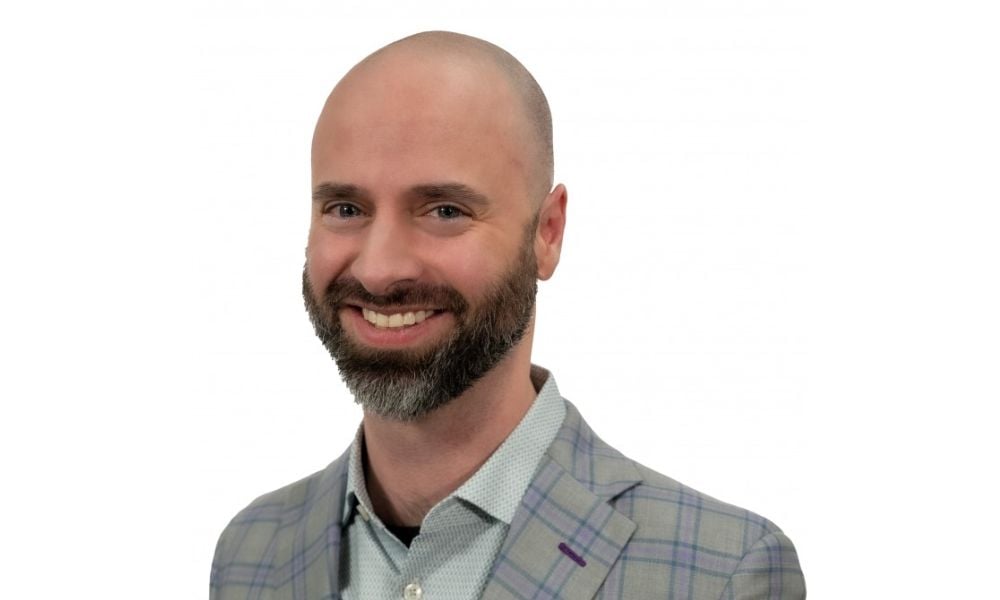
Carson Group, the Omaha-based registered investment advisor with more than $66 billion in assets under management, has deliberately avoided establishing a presence in South Florida, a region that has become a magnet for wealthy migrants seeking low taxes and sunshine. The firm's senior vice president of M&A, Michael Belluomini, explained the rationale at Schwab's IMPACT conference in Boston, citing a policy that restricts the firm from accepting foreign nationals as clients.
“The challenge with South Florida is foreign clients a lot of times. So we don't allow on our ADV right now foreign nationals as clients, and that you can run up against that in South Florida, like a lot of South American or Central American clients,” Belluomini said. This policy effectively rules out Miami and its surrounding affluent enclaves, where international buyers dominate the luxury real estate market. According to Miami Realtors, foreign buyers spent $4.4 billion on South Florida residential property in 2025, led by purchasers from Colombia, Argentina, Mexico, and Brazil.
Carson does maintain Florida offices in Sarasota, Tampa, Ponte Vedra Beach, and the Orlando area, according to its Form ADV, but nothing in the state's southern tier. The firm's network spans more than 165 partner offices across roughly 40 states, including over 50 Carson Wealth locations in its corporate RIA channel. Despite the region's wealth, the firm's compliance stance has kept it out of Miami and West Palm Beach.
While some competitors have expanded overseas—Creative Planning and Miami-based Corient made acquisitions in Switzerland, the Cayman Islands, London, and Paris this year—Belluomini said international expansion is “not on our immediate radar.” He noted that the U.S. market offers ample deal flow, and the firm has not needed to look abroad. “We would never be opposed to great acquisitions elsewhere. But at this point, there's so much great opportunity in the U.S. and there's so much deal flow that we haven't had to look international, but never say never,” he added.
Carson's acquisition pace has been robust. The firm, which counts Bain Capital as a minority investor, recently completed the acquisition of a $1.6 billion Atlanta-area RIA, deepening its Southeast footprint. Belluomini said Carson is on track to finish 2026 with 26 or 27 announced acquisitions and about 35 completed, up from 23 deals last year. “It's a monster year for us,” he said, adding that the firm works with more than 60 investment banks that bring M&A opportunities.
This pace contrasts with industry-wide trends. DeVoe & Company reported a 17% drop in third-quarter RIA M&A, though Echelon Partners found that activity held near record levels, counting five Carson Wealth deals worth about $2.7 billion in acquired assets. The discrepancy highlights Carson's aggressive growth strategy even as the broader market shows signs of cooling.
Looking ahead, Belluomini named Jacksonville, Florida; Boise, Idaho; and Newport News, Virginia, as metro areas where he hopes to see Carson expand. “I like being able to sort of support Main Street,” he said, noting that rural markets are also within the firm's M&A pursuits. But urban centers are equally attractive: “I think any metro area where we don't have a presence would be great. Philadelphia, like right in Center City, would be good for us. We don't have anything in New York City on the island. So I'd love something right in the middle of Manhattan. Midtown would be great,” he said.
Carson's selective geographic strategy reflects a broader trend among RIAs balancing growth opportunities with compliance constraints. As the firm continues to expand its footprint, its avoidance of South Florida underscores the importance of client eligibility policies in shaping M&A decisions. For advisors considering partnerships, Carson's approach offers a case study in aligning growth with regulatory and operational boundaries.