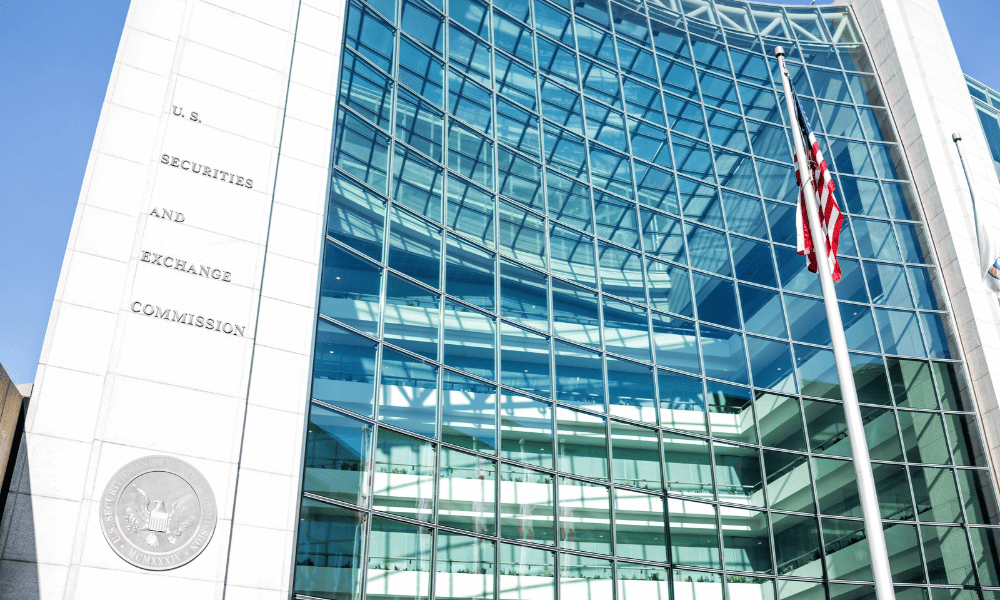
A federal judge in the Eastern District of New York entered a final judgment by consent on November 9, 2026, permanently barring a former employee of an EDGAR filing agent from future violations of federal securities laws. The civil action, brought by the Securities and Exchange Commission, ran parallel to a criminal prosecution that resulted in a guilty plea to conspiracy to commit insider trading.
The defendant, whose name was not disclosed in the SEC's announcement, worked for a firm that submits documents to the SEC's EDGAR system on behalf of public companies. That position gave him access to corporate disclosures before they were made public. According to court records, between approximately January and June 2025, he used that access to trade securities with a co-conspirator.
At a plea hearing on October 21, 2025, the defendant admitted that he "knowingly participated in a scheme with another individual with the intent to defraud," using confidential information from his employer to "purchase stocks and then sell it at a gain in price." He also acknowledged that he knew he had a duty to keep the information confidential. He pleaded guilty to conspiracy to commit insider trading under 18 U.S.C. Sections 1349 and 3551 et seq.
The civil judgment permanently enjoins him from violating Section 10(b) of the Securities Exchange Act and Rule 10b-5, the primary anti-fraud provisions, as well as Section 14(e) and Rule 14e-3, which address trading around tender offers. The inclusion of tender-offer provisions suggests that some of the confidential information involved pending tender offers, a particularly sensitive category of material nonpublic information.
The court ordered disgorgement of $500,619 plus prejudgment interest of $8,832, totaling $509,451. That obligation was deemed satisfied by forfeiture and restitution orders in the criminal case. The criminal plea agreement separately set a forfeiture money judgment of $554,397.
The defendant faced a maximum prison sentence of 20 years. The government's estimated advisory sentencing guidelines range was 37 to 46 months, based on an offense level of 21 and Criminal History Category I. Sentencing was scheduled for March 4, 2026.
This case underscores that material nonpublic information risk extends beyond advisory firms and investment banks. Third-party service providers—filing agents, printers, data vendors, and legal counsel—often handle the same confidential material, sometimes with less institutional oversight. The SEC's pursuit of both civil and criminal actions against someone in that chain signals the regulator's willingness to reach beyond the trading desk.
The defendant consented to the judgment, waived findings of fact, and waived his right to appeal. The court retains jurisdiction to enforce the terms. The SEC's enforcement action is part of a broader crackdown on insider trading, including recent cases such as lawsuits against corporate insiders and fraud cases involving financial professionals.



