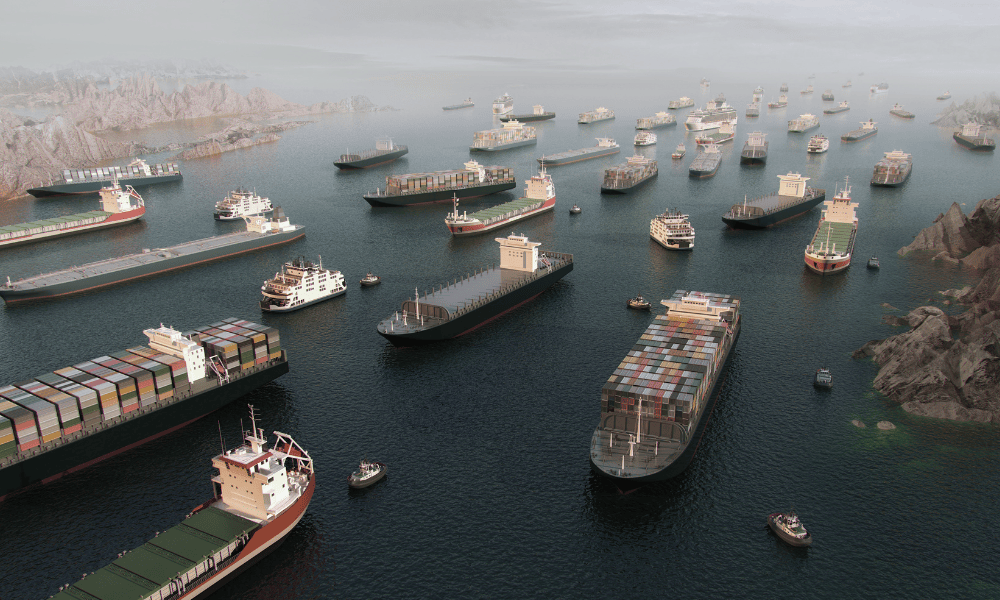
On Tuesday, the Consultative Shipping Group (CSG)—an informal body of maritime regulators from 18 nations, including the U.S., Canada, and key European shipping powers—issued a rare joint statement through the Danish Maritime Authority. The warning lands at a moment when Brent crude trades above $100 per barrel and the Strait of Hormuz, a conduit for roughly one-fifth of daily global oil supply, remains effectively stalled by conflict. The group's message: the rules-based framework that has long governed freedom of navigation is fraying, and further erosion would send shockwaves through supply chains, energy markets, and ultimately client portfolios.
The CSG's statement zeroes in on a structural threat: the expansion of what it calls an unregulated shadow fleet. These are hundreds of vessels operating outside standard insurance, safety, and transparency frameworks, often circumventing sanctions and bypassing environmental and safety standards. The result, the group warns, is a two-tier market—one tier governed by recognized international rules, the other operating in opacity. This parallel system "increases risk" and undermines the trust and predictability that the broader maritime market depends on, according to the statement.
For financial advisors, the CSG's warning is not a market outlook, but it maps directly onto the portfolio pressures they have navigated throughout 2026. BlackRock's Spring 2026 Investment Directions report notes that energy, materials, and utilities are seeing positive earnings revisions precisely because the market is beginning to price supply resilience as a structural investment theme, not a cyclical one. When maritime regulators issue a joint statement warning of systemic fragmentation, that argument becomes harder to dismiss.
The CSG's call is for political support and consistent enforcement of existing international rules, not new ones. The group points to the United Nations Convention on the Law of the Sea (UNCLOS) and the International Maritime Organization (IMO) as providing the legal and institutional framework needed. What is missing, the statement argues, is consistent application.
For advisors, three areas warrant attention. First, energy exposure: the Strait of Hormuz carries approximately one-fifth of the world's daily oil supply. Any sustained disruption to that corridor has been shown, in 2026, to feed through to inflation and corporate margins with unusual speed. Wood Mackenzie, a research firm, has estimated that a prolonged closure of the strait could push Brent crude toward $200 per barrel by year-end 2026 and reduce U.S. GDP growth to below 1 percent—scenarios that would reshape risk-asset positioning significantly, according to a May 2026 analysis.
Second, supply chain diversification has moved from a corporate risk management conversation to a macroeconomic investment theme. Companies with geographically concentrated supply chains—particularly those running through key maritime chokepoints—carry a risk premium that may not yet be fully reflected in valuations. This aligns with broader trends in alternative asset flows as advisors seek to hedge against such structural risks.
Third, the CSG statement underscores a point that the WTO put in quantitative terms in its March 2026 outlook: baseline world merchandise trade volume growth was projected at just 1.9 percent in 2026, down from 4.6 percent in 2025. Slower trade growth is a headwind for the global earnings expansion that equity markets have been pricing. This is a critical consideration for advisors weighing equity overweight strategies in a fragile trade environment.
The statement closes with a call to all maritime nations to actively support the core principles governing shipping—from freedom of navigation to the multilateral frameworks administered by the IMO. The underlying message for investors is the same one advisors have been delivering to clients all year: when the infrastructure of global commerce is under strain, diversification is key. As global regulators warn of systemic risks across markets, the shipping fragmentation adds another layer of uncertainty.


