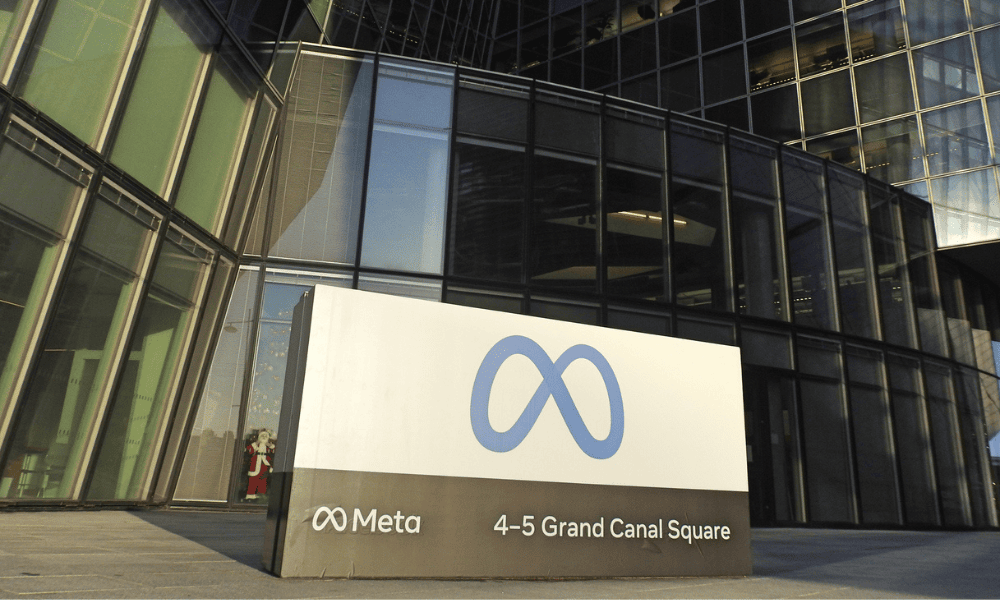
Mark Zuckerberg's sweeping vision for "personal superintelligence" landed on August 10, 2026, promising AI agents that would manage users' finances, health, and careers around the clock. But the manifesto, titled The Future is for Everyone, arrives as Meta Platforms Inc. reports a staggering 91% year-over-year collapse in free cash flow, which fell to $784 million in Q2 2026 from $8.55 billion a year earlier. The juxtaposition underscores the tension between Meta's AI ambitions and its near-term financial reality.
Meta's capital expenditure guidance for 2026 stands at $115–$135 billion, nearly double the $72.2 billion spent in 2025. Operating expenses are projected to reach $165–$169 billion, up from $117.7 billion last year. The bulk of this spending is directed at massive data centers designed to support next-generation AI training and inference workloads. For wealth managers, the question is whether this investment cycle will eventually translate into shareholder value or become a prolonged drag on returns.
Advertising engine still humming
Despite the cash flow crunch, Meta's core advertising business remains robust. Q2 2026 revenue rose 28% year over year to $60.8 billion, fueled by an 18% increase in ad impressions and a 6% rise in average price per ad. The company's family of apps now reaches 3.6 billion daily active users, including 2 billion on Instagram alone. This distribution advantage is central to Zuckerberg's argument that Meta can deliver AI to consumers at scale, unlike labs focused on enterprise or government clients.
However, net income for Q2 2026 slipped 14% to $15.85 billion, or $6.18 per share, partly due to $2.4 billion in legal expenses and $1.18 billion in severance costs from May layoffs. Shares fell 4.2% in after-hours trading to $560.85, signaling that Wall Street is closely monitoring the capex timeline. As advisors field client queries on tech valuations, the sustainability of Meta's AI spending becomes a key talking point.
Monetization beyond ads
One notable detail in Zuckerberg's manifesto is a "dynamic auction mechanism" for compute access, hinting at a future where AI services are priced like utility infrastructure. This model, similar to cloud providers like Amazon Web Services and Microsoft Azure, could open a new revenue stream outside advertising. Meta has not provided financial guidance on this component, but it signals a strategic shift toward enterprise-like monetization. For advisors, this diversification could mitigate risks associated with ad cyclicality, though it remains speculative at this stage.
Zuckerberg also announced "America's Workforce Academy," a skilled trades training initiative tied to data center communities. The company cited a $50,000-per-teacher bonus in Richland Parish, Louisiana, funded by increased local tax revenues. Such community benefits are increasingly important as tech firms face bipartisan scrutiny in Washington. This move may help Meta secure permits and goodwill for its infrastructure buildout, a factor that analysts see as critical to AI infrastructure value.
Governance and oversight
Zuckerberg emphasized that Meta's independent board will approve safety criteria for AI model releases and review compliance. He also called on frontier AI labs to share intermediate training checkpoints with the federal government and contribute to cybersecurity hardening. These governance measures aim to preempt regulatory backlash, but they also add layers of complexity to Meta's AI deployment. For investors, the balance between innovation and oversight will shape the company's risk profile.
The broader context is a surge in AI infrastructure spending, with industry-wide capex hitting $690 billion by 2026. Yet, as public skepticism and insider sales mount, the market is questioning whether such investments will yield commensurate returns. Meta's cash flow decline is a stark reminder that even tech giants face trade-offs. Advisors should weigh Meta's long-term AI potential against the immediate financial strain, particularly as the company's free cash flow has become a focal point for valuation models.
In the near term, Meta's advertising flywheel continues to fund its AI ambitions, but the duration of this transition is uncertain. With capex guidance at the high end of $135 billion, any revenue shortfall could amplify pressure on margins. As the company navigates this capital-intensive phase, advisors may consider how Meta's stock fits into client portfolios, balancing growth prospects against the risks of prolonged investment cycles.