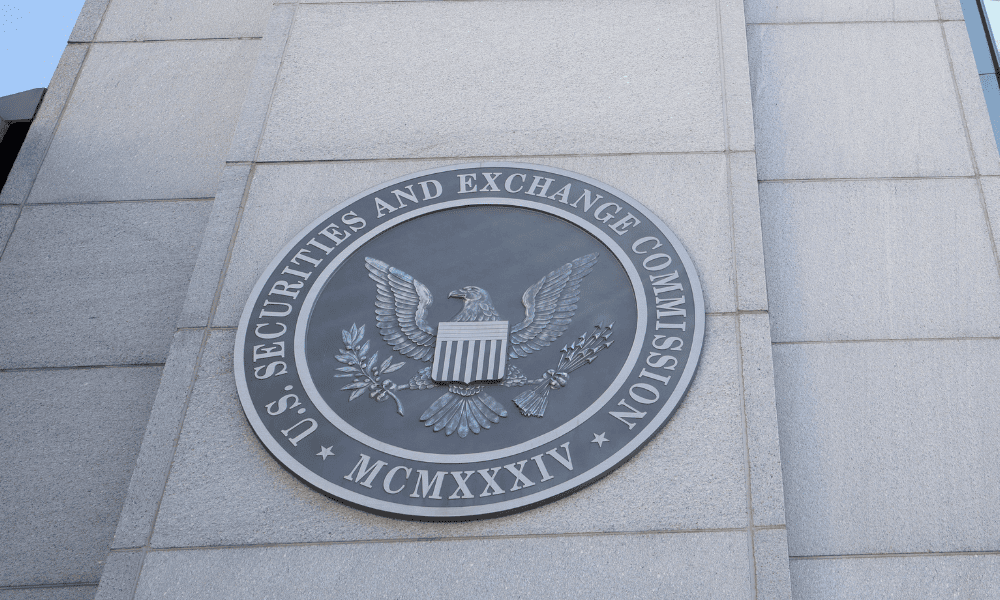
Federal and state securities regulators intensified their crackdown on financial fraud during fiscal 2026, with the SEC reporting a surge in enforcement actions and state authorities documenting a sharp rise in broker-dealer cases. The SEC filed 348 enforcement actions in the fiscal year ending September 30, securing $1.095 billion in monetary relief, including $752 million in disgorgement and prejudgment interest and $343 million in civil penalties. The agency also returned approximately $731 million to more than 250,000 harmed investors, according to its November 10 announcement.
State securities regulators, operating both independently and in coordination with federal authorities, brought 1,036 civil, administrative, and criminal actions against 1,236 individuals and entities, according to the North American Securities Administrators Association's (NASAA) 2026 Enforcement Report. These actions resulted in more than $437 million in restitution to investors and over $383 million in fines and penalties. The state-level data reflects a year in which regulators at every level focused on Ponzi schemes, cross-border fraud, digital asset scams, and the exploitation of retail and older investors.
Broker-dealer enforcement surges
Broker-dealer enforcement was particularly aggressive at the state level. NASAA members brought 143 actions naming broker-dealers as respondents or defendants, a 66% increase over 2024. Actions against broker-dealer agents rose 123% year-over-year. Enforcement actions involving investment advisers and their representatives also climbed, up 30% and 61.5%, respectively. These figures underscore the heightened scrutiny on financial professionals and firms, a trend that advisors should monitor closely.
The SEC's enforcement division also emphasized individual accountability, with two-thirds of all standalone actions including charges against at least one individual. SEC Chairman Paul S. Atkins said the success of the enforcement program is measured by how effectively it protects investors and strengthens confidence in the markets. David Woodcock, director of the SEC's Division of Enforcement, said the division had reviewed its investigative docket and launched several new initiatives during the year.
Ponzi schemes and pre-IPO fraud in focus
The year's enforcement calendar was crowded with Ponzi cases. The SEC charged Goliath Ventures, Inc. and its founder and CEO for allegedly operating a multi-year scheme that raised at least $425 million from more than 1,300 investors. In a separate action, three founders were charged in connection with an alleged Ponzi targeting Orthodox Jewish communities in New Jersey and New York, raising approximately $47 million from more than 87 investors. AKL Transport LLC and its founder were also charged in an alleged scheme that raised at least $127 million from approximately 765 investors nationwide.
Pre-IPO fraud emerged as a distinct focal point. The Commission charged private fund adviser Adit Ventures Management and its CEO for allegedly defrauding investors in pre-IPO shares, including misappropriating advisory client assets and charging millions in undisclosed fees. A separate action charged Meyer Global Management and its CEO for allegedly defrauding investors in connection with pre-IPO securities in SpaceX and other private companies. The SEC also charged boiler room operator Andrew Spaventa for allegedly defrauding retail investors of $74 million in a scheme that purportedly offered access to pre-IPO shares while charging hidden fees.
Digital asset and senior investor cases climb
State regulators opened 677 new investigations involving cryptocurrency or digital assets in 2025, up from 463 the prior year, resulting in 83 enforcement actions. Pig butchering schemes—where fraudsters build online relationships before draining victims' accounts—accounted for 215 investigations, while social media fraud drove 181 more. Older investors remained the most targeted demographic, with state regulators receiving 4,690 complaints regarding alleged misconduct against seniors in 2025, a 30% jump from 2024's 3,613 complaints. Investigators opened 1,977 new cases involving older investors and took 158 enforcement actions.
Coordinated multi-state action secured approximately $27.25 million in total restitution from major brokerage firms that had charged unreasonably high commissions on small-dollar transactions over a five-year period. Regulators said these cases involved minimum commission charges as high as $95, well above the standard 5% regulatory threshold. This development is particularly relevant for advisors, as it highlights the importance of fee transparency and compliance with regulatory expectations.
Structural changes aim to sharpen enforcement
On the structural side, the SEC's Division of Enforcement spent the fiscal year reorganizing and investing in new capabilities. The agency formed a Retail Fraud Working Group to identify and disrupt fraudulent schemes targeting everyday investors, including Ponzi schemes, impersonation scams, and market manipulation. It also established a Financial Reporting and Accounting Unit to concentrate expertise around detecting accounting fraud earlier in the reporting cycle. These initiatives are part of a broader effort to enhance the SEC's investigative capabilities, as noted by Woodcock.
The SEC's whistleblower program received approximately 26,000 tips during the fiscal year—the highest number of individual award recipients since fiscal year 2023—and distributed more than $158 million in awards to 65 individuals. Since the program's launch in 2011, the SEC has ordered more than $11 billion in financial remedies in cases driven in whole or part by whistleblower information. For advisors, the heightened enforcement environment underscores the need for robust compliance programs and vigilance against fraud, particularly in areas like AI-driven fraud detection and elder abuse protections.



