The Securities and Exchange Commission's reported examination of continuation vehicles—the increasingly popular private equity structure for rolling over unsold assets—should prompt financial advisors to apply the same rigorous due diligence they would to any new investment, according to legal experts.
Data from Evercore shows that manager-led secondary transactions, predominantly executed through continuation vehicles, reached $106 billion in 2025, up from $70 billion the prior year. Meanwhile, Bain & Company reported that as of June, private equity firms held a backlog of roughly 33,000 unsold portfolio companies globally, intensifying the need for alternative exit routes when traditional sales or IPOs are not viable.
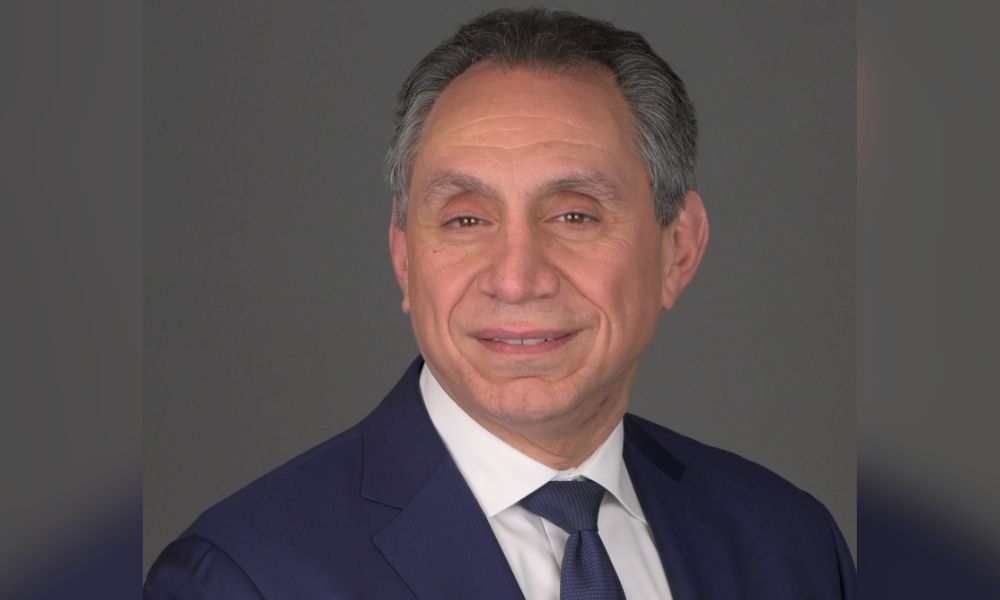
Nick Tsafos, partner in charge of EisnerAmper's New York office, argues that the SEC's focus on continuation vehicles should push advisors to engage independent due diligence teams, carefully vet manager lists, and develop a deep understanding of the underlying portfolio companies and their industries. "These investments should be evaluated with the same rigor as any other investment opportunity," Tsafos said, "and advisors must be prepared to walk away if the opportunity does not align with their investment criteria."
Conflicts of Interest Under the Microscope
Tsafos is not surprised by the regulatory attention, given the inherent conflicts in continuation vehicles. The same investment advisor typically represents both the selling investors from the original fund and the new investors buying in. "How is the investment advisor that's selling and continuing on making sure that the selling investors are getting proper value for the risk they took, and the [incoming] investors are getting the best price for the risk that they're taking on?" he asked. "That is a tightrope."
At the MFA Legal & Compliance 2026 Conference, SEC Enforcement Director David Woodcock—who assumed the role in May after Margaret Ryan's abrupt departure in March—said the agency is "attuned to potential risks relating to liquidity, fees, valuations, and conflicts of interest—not only at the private fund adviser level but throughout the distribution chain." He stressed that firms must ensure their representatives understand the products they sell relative to clients' risk profiles.
Given the sheer volume of deals flowing through continuation vehicles, Tsafos believes it is statistically inevitable that the SEC will uncover bad actors. "You're going to have continuation vehicles on one end of the bell curve that do very well, and investment advisors that do everything right," he said. "And then you have the other end of the bell curve that's not so good. You can't treat everybody the same, but the numbers tell you that you have to pay attention."
Revisiting Investment Theses in a New Era
Tsafos observes that many current continuation vehicles trace back to deals struck in 2021 and 2022, when ultra-low interest rates and abundant capital inflated private equity valuations. Roughly half a decade later, many exits have failed to materialize as expected, forcing managers to reassess whether their original investment theses still hold. "Does the thesis need to be changed—not because of interest rates, but because of what technology is bringing to this opportunity?" he asked, referencing artificial intelligence. "And if it is [enhancing the opportunity], how are you ascribing value to that for the investors that are selling? Because now they're selling based on the old thesis, and the new investors are buying on the new thesis, how do you marry that together?"
To bridge this gap, independent reviews should extend beyond financial modeling to examine the underlying business. For example, the Wall Street Journal reported that domestic automakers are pivoting toward military applications in response to Pentagon pressure, effectively pushing existing investors into a business strategy they may not support.
Advisors Must 'Pop the Hood'
Tsafos advises high-net-worth clients, family offices, and ultra-high-net-worth investors to go beyond the manager's marketing materials and ask tough questions. "If they are important enough to this investor, they should be asking a lot of tough questions," he said. "I'm not saying the investment advisor is not giving them all the information. But investors need to really go in and do their due diligence. It shouldn't just be taken at face value."
Thin early disclosures are not necessarily red flags, Tsafos noted. Because educating investors about a continuation vehicle is time-consuming, managers may wait until the pool of prospective investors narrows before opening full diligence. "I've seen it where an investment advisor said, 'Okay, we've got seven, eight, ten investors'—and within three or four weeks, that's down to three or four," he said.
On valuations, Tsafos acknowledged natural limits to reliability, especially in fast-moving sectors like AI-driven technology. "That's the billion-dollar question," he said. "In more mature industries, you have a basis for valuation. But with what we're seeing in technology right now, it's very hard to say a 22-times multiple is right, 21 times is a steal, and 23 times is overpaying. There's just not enough data, and understanding the depth of the management team is tough."
As the SEC's probe unfolds, advisors should heed the warning from Opto Investments' executive about single-asset continuation vehicles, and consider the broader rise in AI compliance testing as regulators tighten oversight. The Cynosure deal with Hamilton Lane illustrates the growing appeal of these structures, but also the need for careful vetting.