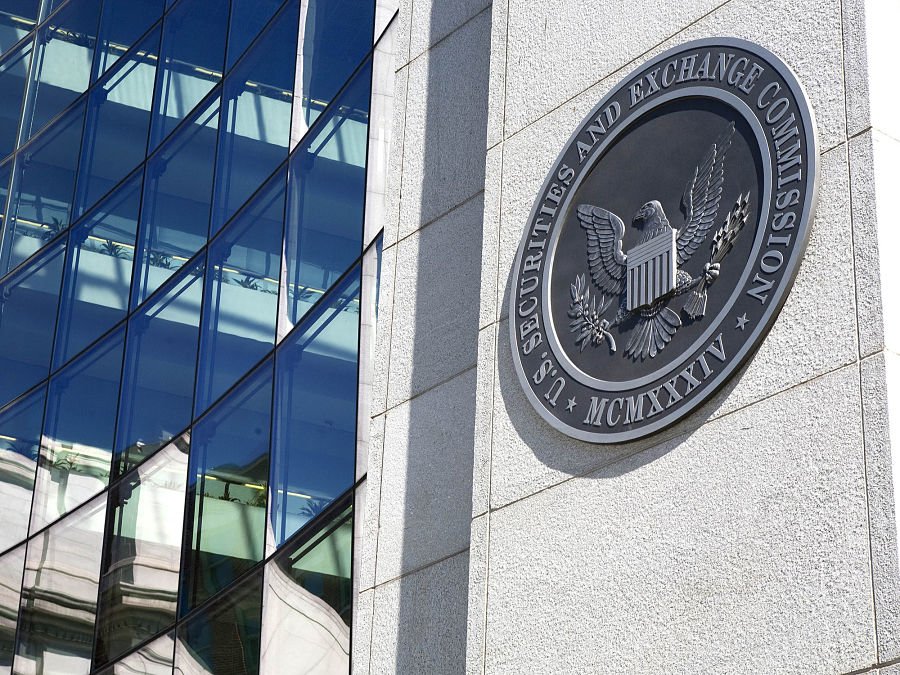
The Securities and Exchange Commission has proposed a sweeping new regulatory framework for digital assets, a move Chairman Paul S. Atkins described as a landmark shift in U.S. policy. The plan, dubbed Regulation Crypto Assets, aims to give issuers clear paths to raise capital while staying within federal securities law, addressing years of uncertainty under previous leadership.
Speaking Tuesday, Atkins said the proposal would finally provide "clear pathways to raise capital under the federal securities laws," after what he called an "activist SEC weaponized against this asset class." The framework builds on interpretive guidance issued in March 2026, which gave advisors a more defined line on when a crypto asset might be considered a security.
Two exemptions and a safe harbor
At the core of the proposal are two exemptions from Securities Act registration. A startup exemption would allow issuers to raise up to $5 million in a single offering during any four-year window, with principles-based disclosure. A broader fundraising exemption is split into two tiers: up to $20 million per 12-month period under Tier 1, and up to $75 million per 12-month period under Tier 2, with the larger tier requiring audited financials and ongoing reporting.
The proposal also introduces a conditional safe harbor that would exclude certain crypto assets from the definition of an "investment contract" under the Securities Act of 1933 and the Securities Exchange Act of 1934. Assets falling outside that definition would not be classified as securities, meaning they would not be subject to SEC registration, custody rules, or the disclosure obligations that shape how advisors recommend or hold them for clients.
A state preemption provision would override state-level registration requirements for compliant offerings and certain secondary-market transactions, though states would retain fraud enforcement authority. That could significantly simplify compliance for issuers operating across multiple jurisdictions.
Building on JOBS Act templates
The Commission structured the framework to align with existing templates from the JOBS Act of 2012, specifically Regulation Crowdfunding and Regulation A+, with modifications suited to crypto's distinct economics. Commissioner Hester Peirce, a longtime advocate for clearer rules, said "our rules need to be tailored to changing market developments and designed to protect investors and market integrity." Commissioner Mark Uyeda, who led the SEC's crypto task force earlier this year, was candid about past failures: "Those who sought to register their crypto offerings were often given a bureaucratic runaround with no resolution in sight."
The proposal arrives as the tokenized asset market expands rapidly. Securitize recently became a registered investment advisor as tokenized assets approach a $37 billion record, illustrating institutional appetite. "While Congress continues its important work to advance crypto market structure legislation for the President to sign, the world and our markets keep evolving," Atkins said.
The SEC continues to support the CLARITY Act, which is advancing separately on Capitol Hill, but moved forward unilaterally under existing statutory authority rather than hold the industry in limbo. For advisors, the framework could reshape how they evaluate crypto products, though the proposal is subject to a public comment period before final adoption.