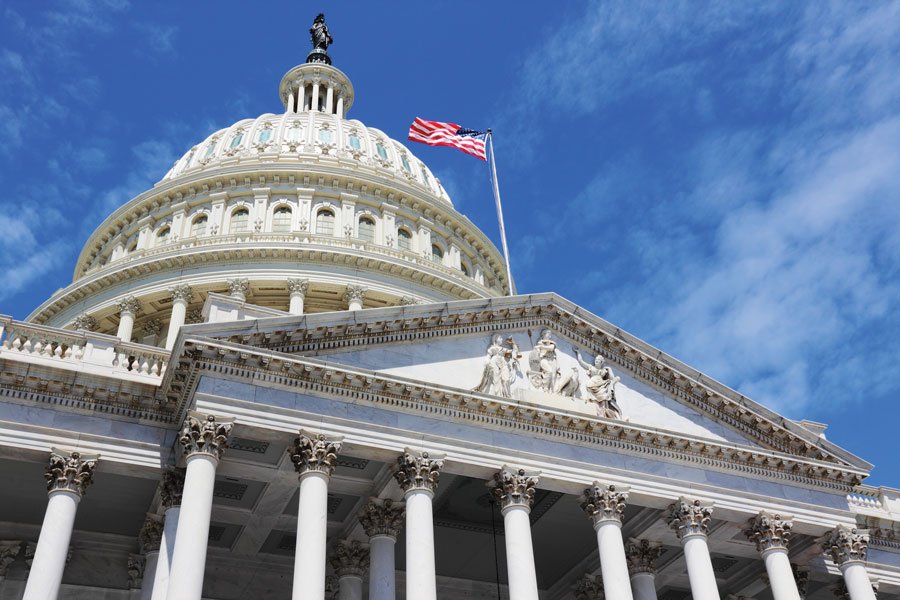
The U.S. Senate voted unanimously on Thursday to prohibit its members from trading on prediction markets, a move that follows a series of legislative proposals and enforcement actions targeting the rapidly expanding industry of event-based contracts. The new rule, which amends the Senate's standing rules, bars lawmakers from entering any contract or transaction that depends on the occurrence or non-occurrence of a specific event, effectively covering the full range of products offered by platforms such as Kalshi, Polymarket, and PredictIt.
Sen. Bernie Moreno (R-Ohio), who introduced the resolution, stated that any senator using public office for personal financial gain is a betrayal of their oath. The unanimous action, first reported by CNBC, comes amid mounting legal and regulatory pressure on prediction markets. Earlier this month, Kalshi suspended and fined three congressional candidates for trading on contracts tied to their own races.
The Department of Justice also announced the arrest of Army Special Forces Master Sgt. Gannon Van Dyke, who allegedly used classified information about the U.S. military mission that captured Venezuelan leader Nicolás Maduro to place bets on Polymarket, netting nearly $410,000. Acting Attorney General Todd Blanche noted that while prediction markets are a new phenomenon, federal laws protecting national security information fully apply.
On the same day, a group of Democratic lawmakers called on the Commodity Futures Trading Commission to issue a rule blocking insider trading and corruption in prediction markets, and to ban event contracts tied to elections, military actions, sports, and government decisions lacking a valid economic hedging purpose. The legislative activity reflects bipartisan unease about how prediction markets interact with political power and privileged information.
Sens. John Curtis (R-Utah), Adam Schiff (D-Calif.), and Catherine Cortez Masto (D-Nev.) previously introduced the Prediction Markets are Gambling Act, which would prohibit companies from offering contracts on sporting events, athletic competitions, and casino-style games. Curtis said the bill is intentionally limited in scope, focusing on a slice of the broader problem. He also highlighted social costs, calling gambling a regressive tax.
A survey by the Siena Research Institute and St. Bonaventure University found that 27% of Americans now hold active accounts on online prediction market platforms. Congressional researchers have flagged suspicious trading patterns, including a sharp spike in large purchases of contracts predicting U.S. military strikes on Iran shortly before those strikes occurred in February. CNN reported that one Polymarket trader has made nearly $1 million since 2024 by placing prescient bets on U.S. and Israeli military strikes against Iran.
A companion bill, the Public Integrity in Financial Prediction Markets Act of 2026, would specifically bar government officials from using nonpublic information to trade prediction contracts. Curtis and Schiff are co-sponsoring that legislation, along with Sens. Elissa Slotkin (D-Mich.) and Todd Young (R-Ind.). Curtis suggested the current slate of bills is only the beginning, emphasizing the need for swift action.
The Senate's move is part of a broader regulatory trend. The SEC recently fined a $10B RIA and its ex-CEO $2.1M for undisclosed profit-sharing and trading conflicts, highlighting ongoing scrutiny of financial market integrity. Meanwhile, the rise of prediction markets has drawn comparisons to the growth of crypto futures trading, as seen in Schwab's enablement of 24/7 crypto futures trading on thinkorswim.