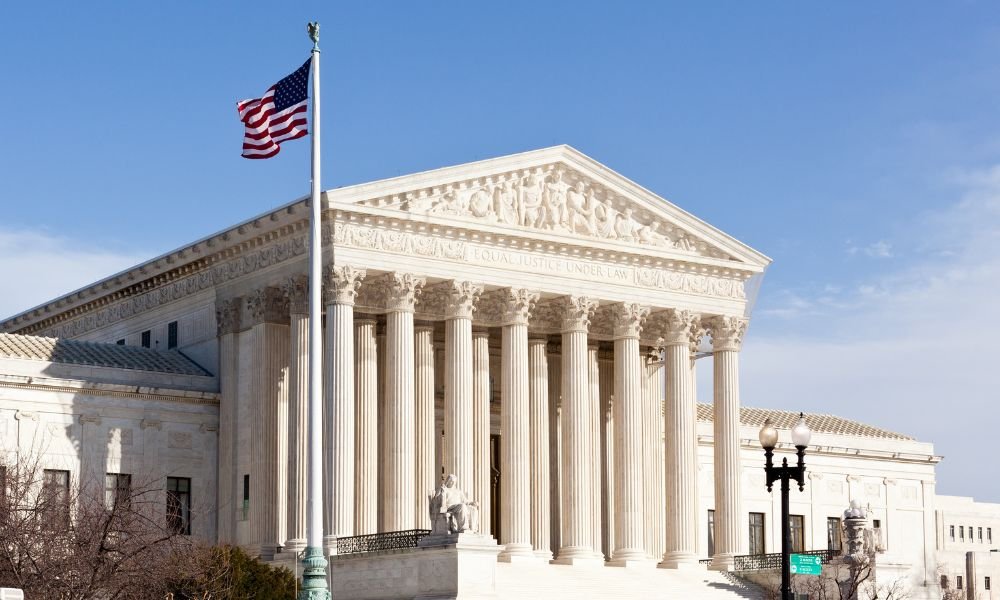
The U.S. Supreme Court dealt a significant blow to activist investors on June 11, 2026, ruling that a key provision of the Investment Company Act of 1940 cannot be used by private parties to challenge fund contracts. The 6-3 decision, written by Justice Amy Coney Barrett, held that Section 47(b) of the ICA does not create a private right of action, effectively stripping activists of a favored legal weapon in their campaigns against closed-end fund managers.
The case pitted Saba Capital Management, a prominent activist investor, against FS Credit Opportunities Corp. and other closed-end funds. Saba had won summary judgment in the U.S. District Court for the Southern District of New York, and the Second Circuit affirmed, allowing the suit to proceed under Section 47(b). That provision states that a court "may not deny rescission" of a contract that violates the ICA "at the instance of any party." Saba argued this language implicitly authorized private lawsuits to unwind such contracts.
The Supreme Court disagreed. Justice Barrett, writing for the majority, explained that Section 47(b) speaks to courts, not to litigants. It instructs judges on how to exercise their remedial powers once a party is already properly before the court seeking rescission. It does not, the Court held, confer a standalone right to sue. The decision emphasized that Congress intended the Securities and Exchange Commission to be the primary enforcer of the ICA, with authority to investigate and bring enforcement actions. When Congress wanted to allow private suits under the ICA, it did so explicitly—the Act contains two such private rights of action, which the Court noted as evidence that Section 47(b) was not intended to create a third.
The ruling also pointed to the legislative history of the ICA. In 1980, Congress amended Section 47(b), replacing the original language that declared violating contracts "shall be void" with the current language about rescission. The Court interpreted this change as narrowing, not expanding, the availability of private remedies. The majority concluded that allowing private suits under Section 47(b) would undermine the SEC's role and create inconsistent enforcement.
Justice Elena Kagan and Justice Ketanji Brown Jackson dissented, with Justice Sonia Sotomayor joining Jackson's dissent. The dissenting justices argued that the plain text of Section 47(b) supports a private right of action, and that the majority's reading unduly restricts investor protections. The case now returns to the lower courts for further proceedings consistent with the Supreme Court's opinion.
For the fund industry, the decision provides a clearer legal landscape. Closed-end funds that adopt defensive measures, such as opting into state laws like the Maryland Control Share Acquisition Act to limit activist voting power, now face less risk of private litigation under the ICA. The SEC retains full authority to enforce the Act's provisions, including the requirement that each share carry equal voting rights. Activists, however, lose a route they had used to challenge takeover protections, potentially shifting their focus to other legal theories or regulatory avenues.
The ruling is likely to have ripple effects beyond closed-end funds. It reinforces the principle that federal securities laws generally rely on public enforcement, unless Congress explicitly provides for private suits. This could influence other areas where investors have sought to use similar statutory language to bring claims. For financial advisors and their clients, the decision underscores the importance of understanding the regulatory framework governing fund structures and the limits of investor remedies.
As the case heads back to the lower courts, industry observers will watch for any further developments. The SEC has not indicated whether it will take enforcement action in this matter, but the agency's authority remains intact. In the meantime, fund managers may feel more confident in adopting defensive strategies, while activists may need to recalibrate their approaches. The decision marks a significant chapter in the ongoing tension between activist investors and fund boards, with the Supreme Court firmly siding with the SEC's enforcement primacy.