A Texas investor has filed a federal lawsuit against Lasater Capital, LLC—formerly KeyCity Capital—and three of its principals, accusing them of securities fraud and concealing more than $100 million in loan defaults at affiliated entities. The complaint, lodged October 22 in the U.S. District Court for the Northern District of Texas, also names three KCAP-branded investment funds as defendants.
According to the filing, the investor committed $450,000 across two funds in late 2022 and early 2023, relying on marketing materials that touted an “impeccable financial record with no capital losses, no missed preferred dividends, and consistently exceeds targeted returns.” Pitch decks reportedly promised “Zero Principal Losses” and returns that would “Always Exceed Targeted Returns.” To date, the investor has received only $31,335.34 in cash, with no return of principal. The complaint further alleges that $210,950.01 in credited earnings was never paid out, but instead rolled into capital accounts as if the investor had agreed to reinvest—despite his election to receive cash distributions.
The lawsuit leans heavily on a June 9, 2026 emergency cease-and-desist order from the Texas State Securities Board (Order No. ENF-26-CDO-1898). That order found that, since approximately 2024, affiliated entities had “defaulted on loans exceeding $100 million,” lost properties to foreclosure, filed Chapter 11 bankruptcies, and been placed in receivership—all while the firm’s website continued to claim it had “protected the entirety of the investor principal” and “never missed a distribution.” The TSSB also determined that the fund interests were unregistered securities sold through “materially misleading statements” and that “material information was intentionally withheld.”
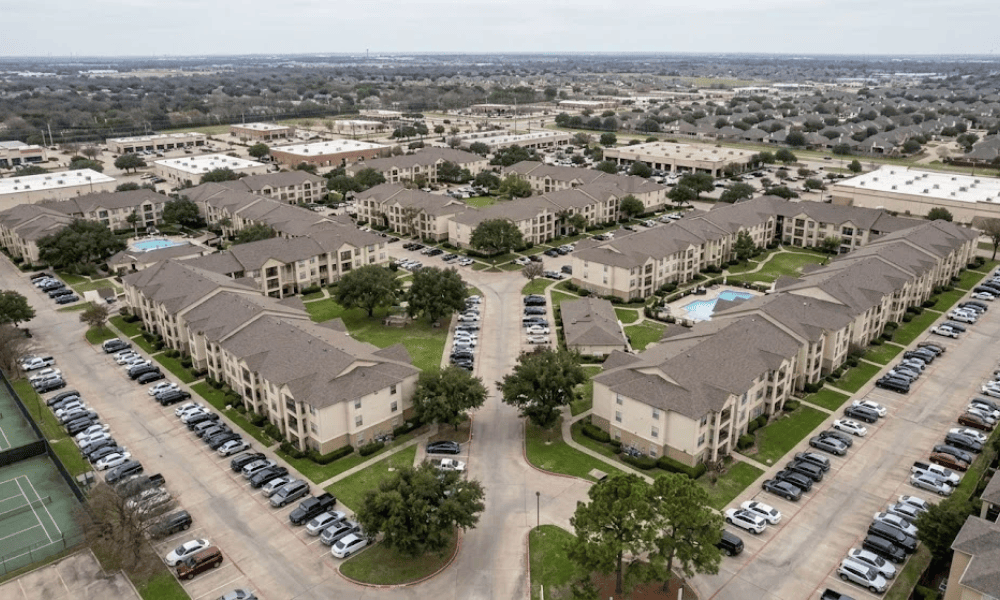
The complaint paints a picture of a Sunbelt multifamily real estate operation stretched too thin. In September 2025, a lender foreclosed on a six-property, 1,240-unit apartment portfolio in Memphis held in a separate KCAP fund—a portfolio the firm’s website had valued at $106 million a year earlier. Additional foreclosures on properties in Bryan and Joshua, Texas followed in August 2025, according to the filing.
Structural changes allegedly worked against existing investors. About four months after the investor’s initial commitment, the firm amended one fund’s partnership agreement unilaterally to permit loans to its own affiliates. The amendment itself acknowledged those loans “involve conflicts of interest on the part of the General Partner.” The complaint alleges the change was pushed through via a passive-consent email that buried the provision in attached redlined documents.
When the investor’s two-year term in one fund ended around late November 2024, his capital was not returned. A written redemption request submitted months earlier went unanswered, the filing states. Meanwhile, promotional activity continued: Instagram ads for a newer fund claimed that “in 20+ years managing over $500 million in assets, we’ve never lost investor capital.” The firm’s CEO reportedly styled himself “The World’s #1 Capital Closers Coach” and used speaking fees, syndicated radio, social media, and celebrity endorsements to promote projected returns of 20% or more.
The complaint references other litigation, including a November 2025 lawsuit in the Southern District of Iowa alleging fraud in connection with a separate KCAP fund, and a case in the Southern District of California where a 72-year-old investor alleges the loss of roughly $1 million in retirement savings. A July 2025 default judgment of $525,000 plus $143,722.36 in interest against the firm and two principals is now on appeal.
The 11-count complaint asserts federal securities fraud, Texas Securities Act violations, common-law fraud, breach of contract, and breach of fiduciary duty. Two counts are brought derivatively on behalf of the funds, alleging the principals wasted fund assets by funneling money to distressed affiliates and collecting fees while distributions were frozen. The investor seeks damages including the $450,000 in unreturned principal and $210,950.01 in withheld earnings, plus attorneys’ fees.
This case echoes other recent allegations of fund mismanagement in the private-credit space. For instance, Broad Street investors allege $1B fund skimmed fees and trapped cash in restricted stock, while Netcapital faces a class action over alleged revenue inflation. Advisors should note that advised investors are more likely to trust AI answers without verification, underscoring the need for rigorous due diligence.



