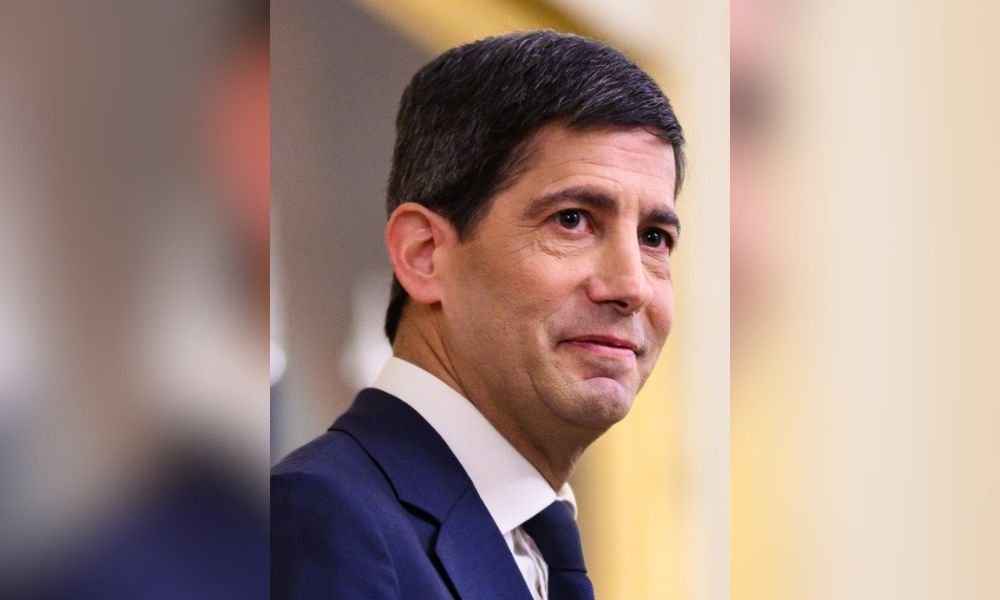
Federal Reserve Chair Kevin Warsh delivered a cautiously optimistic assessment of the U.S. economy on Friday, attributing its durability to a broadening wave of business investment. Speaking on the sidelines of the International Monetary Fund and World Bank annual meetings in Bangkok, Warsh acknowledged that the investment boom, initially concentrated in artificial intelligence, is now spilling into other sectors. While this supports growth, he noted it also adds to near-term inflationary pressures. He refrained from offering any clues about the Fed's next policy moves, keeping the focus on data and market expectations.
No forward guidance on rates
Warsh, who took the helm at the Fed in May, has consistently avoided telegraphing rate decisions. In a conversation with IMF Managing Director Kristalina Georgieva, he reiterated his stance: "I don't prejudge meetings." He defended the September rate hike, which raised the federal funds rate by 25 basis points to a range of 3.75% to 4%—the first increase in three years. "We made very clear that we would deliver price stability, and we removed a dose of accommodation about a month ago," he said.
The move drew criticism from President Donald Trump, who has repeatedly called for lower rates. Despite the tension, Trump has continued to back Warsh, whom he appointed earlier this year. Other Fed officials have been more explicit about their leanings. Minutes from the September 15-16 meeting, released last week, indicated that most policymakers expect another hike before year-end. However, nearly all have stressed the need for more data, leading traders to price in a hold at the October meeting.
This view persisted even after September's consumer and producer price indices came in hotter than expected, pushing both measures further from the Fed's 2% target. The market's reaction suggests that the December meeting remains a live event, with odds fluctuating based on incoming data.
AI investment: a double-edged sword
Warsh described inflation as a shared global challenge, noting that central bankers at the meetings reported similar price pressures. "It's hard to be in a discussion with central bankers and not compare notes and hear the same thing about the surge in prices," he said. He highlighted the synchronized tightening of monetary policy worldwide, which he said leaves "no free riders."
On AI, Warsh sees the spending surge as a near-term inflationary force but a long-term productivity booster. "It's obviously hitting the demand side of the economy before it's going to hit the supply side," he explained. He expressed confidence that AI will ultimately make economies more productive and wealthier, though he warned the transition would be "very bumpy." A Fed task force studying AI's impact on productivity and jobs is set to hold its first public hearing in the San Francisco Bay Area next month.
U.S. resilience, global outlook
Warsh said the investment boom is providing "plenty of tailwinds" for the U.S. economy, which he described as having "strength and durability." He also noted that the global economy has shown "resilience that I'm not sure I would have predicted five or six months ago," given geopolitical tensions. The IMF recently projected that AI investment would keep global growth above 3% this year, partly offsetting the drag from oil prices above $100 a barrel. However, the fund warned of risks from high debt loads and a potential sharp pullback in AI investment.
Warsh emphasized that central bankers in Bangkok agreed on the importance of protecting price stability, which he said underpins business and household confidence. He closed on an optimistic note for the U.S., saying, "I believe optimistically—you might think naively—at least in the United States, we're going to come out of this stronger with a more durable economy, more capable of leading the world on economic growth."
For advisors, the key takeaway is that the Fed remains data-dependent, with December hike odds likely to shift with each economic release. As Warsh's Jackson Hole stance showed, his public comments can move markets, but he's unlikely to offer clarity soon. Meanwhile, the AI-driven investment surge is a theme worth monitoring, as an ECB study warns of correction risks in AI-linked equities. The broader economic picture, including record household wealth, suggests resilience but also vulnerability to AI market swings.