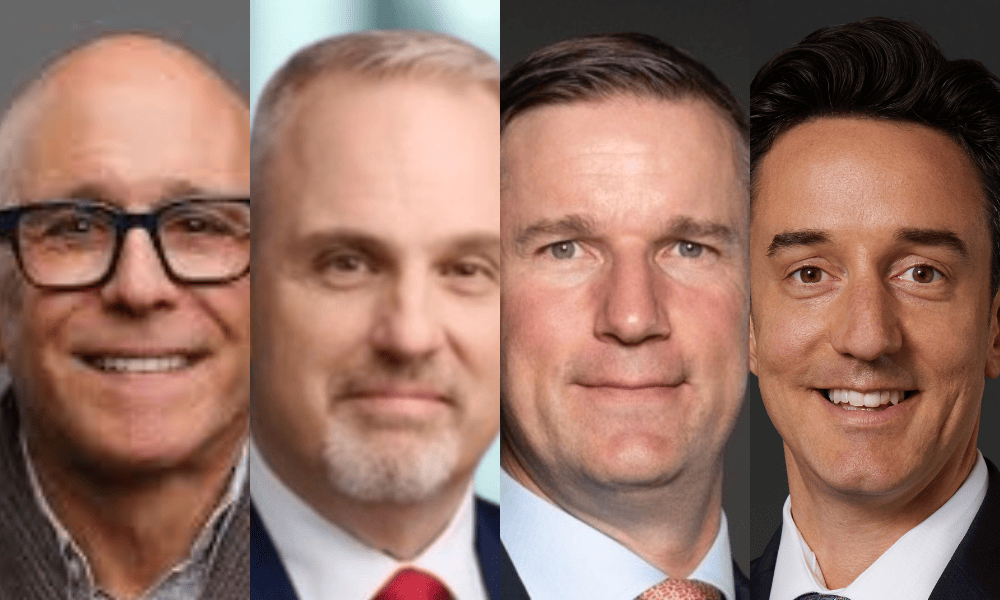
Amplify ETFs, founded by Christian Magoon a decade ago, has grown to roughly $20 billion in assets under management across more than 40 funds, a trajectory that accelerated sharply in recent years. The firm's AUM nearly doubled in a single year, climbing from approximately $9 billion to $17 billion, before continuing into 2026. This growth was fueled by early bets on themes that initially seemed speculative, such as blockchain and covered call income strategies.
Magoon, who launched Amplify's first actively managed blockchain ETF, BLOK, on January 16, 2018, recalls a time when most advisors equated blockchain with speculation. Since inception, BLOK has returned 269.59% on a net asset value basis as of December 31, 2025, a record Magoon cites as validation of the firm's early-mover discipline. Now, he argues, the most consequential ETF themes of the next decade—active management, income generation, and digital infrastructure—are still in their early innings.
Active ETFs as complements, not replacements
The surge in active ETF flows has been widely noted, but Magoon believes many advisors misinterpret the trend. "More investors are recognizing active ETFs are an ideal complement to index ETFs rather than a replacement for them," he said. Active management, he argues, adds the most value in fixed income, international equities, and option-writing strategies—areas where index-based exposure locks portfolios into predetermined rules at times when flexibility is crucial.
For advisors building model portfolios, Magoon sees active and passive as complementary tools. "Active ETFs provide portfolio managers with flexibility and responsiveness to adapt to changing market conditions," he said, particularly in markets where security selection, risk management, or tactical positioning can add meaningful value. This perspective aligns with broader industry trends, as seen in RIA firms turning to active ETFs for tax-efficient growth.
Covered call ETFs: A $1 trillion market with a knowledge gap
Covered call ETFs have surpassed $1 trillion in assets globally, a category Amplify helped build with its DIVO fund, now managing approximately $6.6 billion. However, Magoon warns that rapid growth has created a significant education problem. "One of the biggest misconceptions is that all covered call ETFs are built the same," he said. In reality, strategies range from those that write away nearly all upside for maximum income to those that write only limited calls, preserving most equity upside.
Magoon offers a practical diagnostic for advisors: compare the fund's distribution yield against its long-term total return. If the yield approximates the total return, the fund is likely consuming appreciation to pay income; if the yield is a small fraction, the fund preserves more upside. For DIVO, the sub-advisor Capital Wealth Planning constructs a quality-tilted portfolio of dividend growers and evaluates covered call writing on a holding-by-holding basis, a structural difference Magoon highlights.
Cybersecurity and blockchain: Structural allocations, not tactical bets
Magoon is most bullish on cybersecurity and blockchain infrastructure, both of which he views as foundational to the digital economy. "We view cybersecurity as a long-term strategic allocation rather than a tactical investment opportunity," he said, noting that AI advancements create new vulnerabilities that require protection. On blockchain, he pushes back against its conflation with cryptocurrency, comparing its trajectory to the early internet, which evolved from email to become the foundation of cloud computing and digital commerce.
For advisors evaluating thematic ETFs, Magoon suggests a three-part filter: broad-based investment from governments, corporations, and consumers; a long runway measured in years; and patience to hold through short-term cycles. "Successful thematic investing is not about buying whatever is popular," he said. As the ETF landscape evolves, these themes may well define the next decade, much as new thematic ETFs are emerging across sectors.