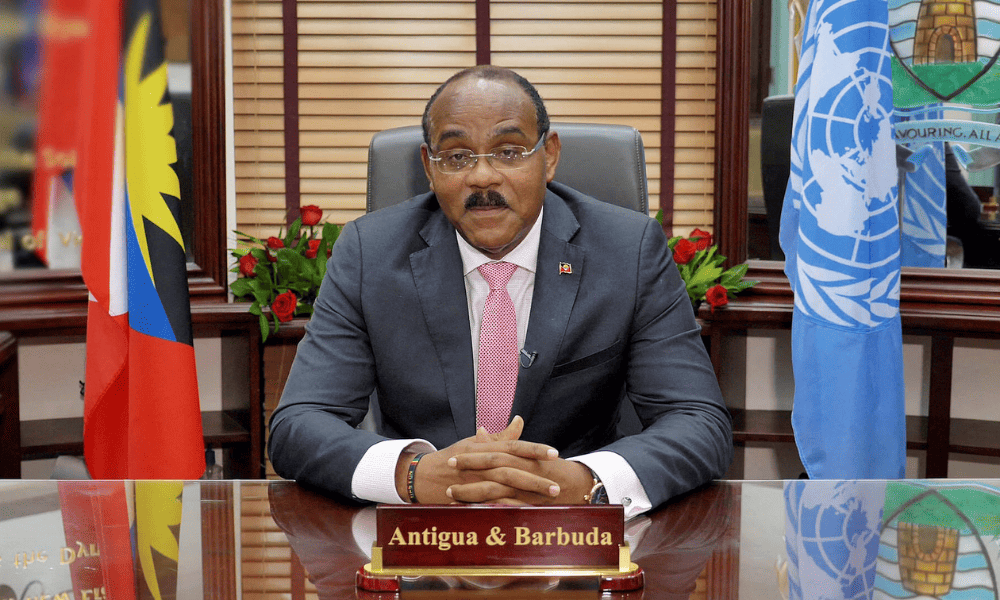
Prime Minister Gaston Browne of Antigua and Barbuda is making a direct appeal to wealthy American investors, positioning his twin-island nation as a "lifestyle superpower" with a rapidly improving economy and a pipeline of luxury developments. In an interview with InvestmentNews, Browne detailed how his government has slashed debt, attracted billionaires, and leveraged a citizenship-by-investment program to draw capital from the United States.
Browne, who grew up in the working-class Point neighborhood of St. John's and now represents it in parliament, dissolved his government in early 2026 to call a general election, seeking a fourth term. He argues that his tenure has reversed a period of "total decay" when the country entered an IMF program with debt-to-GDP around 104%. Today, that ratio has fallen to roughly 62%, and Antigua has recorded consecutive budget surpluses, which Browne says will fund infrastructure and social programs.
The macro recovery underpins an aggressive push into high-end tourism and real estate. On Barbuda, the PLH development has attracted about $1 billion, anchored by a Tom Fazio golf course and designed with storm-resistant landscaping. Robert De Niro's Nobu resort is expected to open by late 2026 or early 2027. On Antigua, projects from Nikki Beach, One&Only, and Marriott are in various stages of construction. "We're not particularly keen on these low-end hotels," Browne said, emphasizing a focus on luxury.
Browne claims that per capita, Antigua and Barbuda has more luxury properties and has attracted more billionaires and multimillionaires than any other Caribbean destination. The government offers duty-free treatment on building materials and other investment incentives to reduce upfront costs and compress payback periods. Security is another selling point: the country typically records no more than 10 homicides annually, and Barbuda has not had a homicide in over 40 years.
For U.S. financial advisors, two features stand out: the citizenship-by-investment program and the personal tax regime. The CIP, now 13 years old, allows investors to obtain citizenship by making a qualifying investment, with constitutional protections against property seizure. Browne noted that the program can also serve as a funding tool for developers, who can raise capital over time through the CIP. The country does not process applications from sanctioned nations like Iran and North Korea and aligns with U.S. and European positions on higher-risk applicants.
Interest from American applicants is rising, Browne said, even amid geopolitical tensions and oil price volatility. "Generally speaking, we keep out of geopolitical spats," he said. The pitch comes as a Morgan Stanley survey shows 55% of retail investors remain bullish despite rising risks, suggesting appetite for alternative destinations. Meanwhile, a Fidelity study found that 43% of stock plan participants are first-time investors, indicating a broader shift in wealth demographics that could benefit niche opportunities like Caribbean real estate.
Browne's vision is not without risks. The country's small size and reliance on tourism make it vulnerable to global economic shocks. However, he argues that the current phase is a renaissance, not a bubble, and that the combination of fiscal discipline, luxury development, and investor protections creates a durable value proposition for high-net-worth individuals seeking both yield and quality of life.