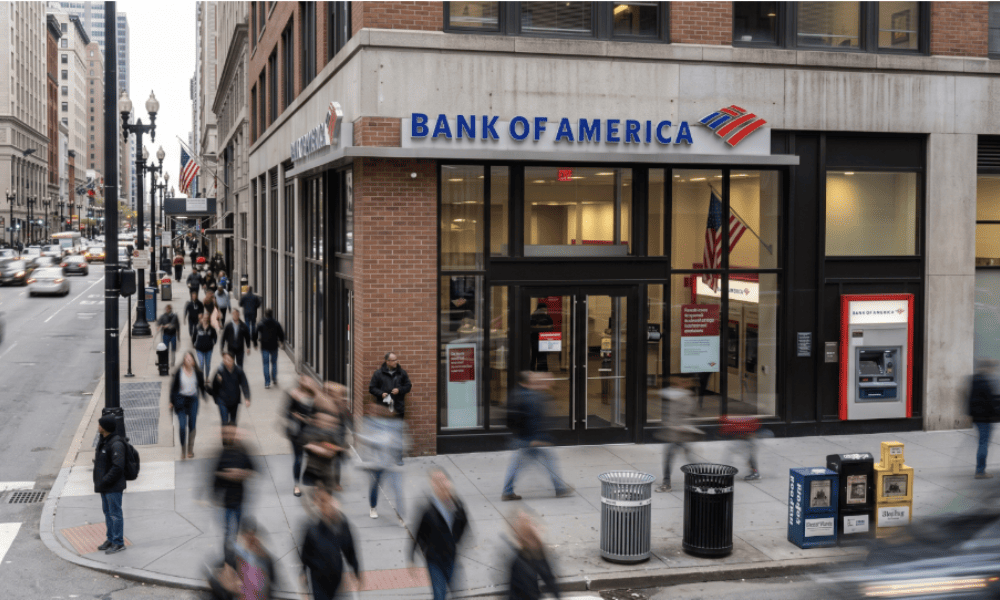
The U.S. Treasury Department announced on Tuesday that Bank of America will pay more than $1.21 billion in penalties to resolve allegations that it violated anti-money laundering (AML) and sanctions laws. The enforcement actions, described by Treasury as record-setting, include a $1.2 billion civil money penalty from the Financial Crimes Enforcement Network (FinCEN) for the bank's failure to report over $5 billion in suspicious transactions and to maintain an adequate AML program.
The $1.2 billion FinCEN penalty is the third-largest in Treasury history, according to the department. In a separate action, the Office of the Comptroller of the Currency (OCC) imposed a $750 million penalty—the largest in its history—for what it called a "deficient and ineffective" AML compliance program at the bank. The Office of Foreign Assets Control (OFAC) also reached an $11.6 million settlement with Bank of America over apparent violations of sanctions programs targeting Iran, Russia, narcotics trafficking, and global terrorism.
Treasury Secretary Scott Bessent said in a statement that the actions send a clear message that even the largest financial institutions are not above the law. He emphasized that when a bank of this size fails to meet its AML and sanctions obligations, the consequences extend beyond its own walls, exposing the entire U.S. financial system to significant illicit finance risks. The penalties come as part of a broader government push to crack down on financial crime, including new Treasury initiatives aimed at enhancing financial oversight.
According to the Treasury, Bank of America admitted to willfully violating the Bank Secrecy Act (BSA) and failing to implement an AML program that met minimum requirements. The bank also failed to conduct due diligence on correspondent accounts for foreign financial institutions and to file suspicious activity reports (SARs) as required. The Treasury noted that the failures included priority national security risks, such as Chinese money laundering networks and illicit finance along the southwest border.
In a statement, a Bank of America spokesperson said the bank worked with regulators to reach the penalty resolutions, which stem from violations cited in the previously reported 2024 OCC Consent Order and FinCEN's investigation. The spokesperson added that the bank has invested billions of dollars in technology and dedicated thousands of employees to combat financial crime, and that it remains committed to completing the remediation work required by regulators. The bank also noted that it supports federal and local law enforcement across thousands of investigations and files hundreds of thousands of SARs each year.
The penalties will have a direct impact on Bank of America's financial results. The bank said its third-quarter results will include a non-tax-deductible charge of $1.2 billion, which will reduce net income by approximately 17 cents per share. The spokesperson noted that the bank has already dedicated substantial personnel and resources to remediation efforts, and those costs are included in the current expense base.
This enforcement action is part of a broader regulatory trend. The Treasury has been increasing scrutiny of financial institutions, including new rules on event contracts and proposed fee caps for certain accounts. Advisors should be aware that such penalties can affect the stability and reputation of large financial institutions, potentially influencing client confidence and investment strategies.
For financial advisors, the case underscores the importance of robust compliance programs at the institutions they work with. While the penalties are directed at Bank of America, they serve as a reminder that regulatory actions can have ripple effects across the industry, including potential changes in how banks handle correspondent accounts and cross-border transactions. Advisors may want to monitor any shifts in Bank of America's operations or client services as a result of the remediation efforts.