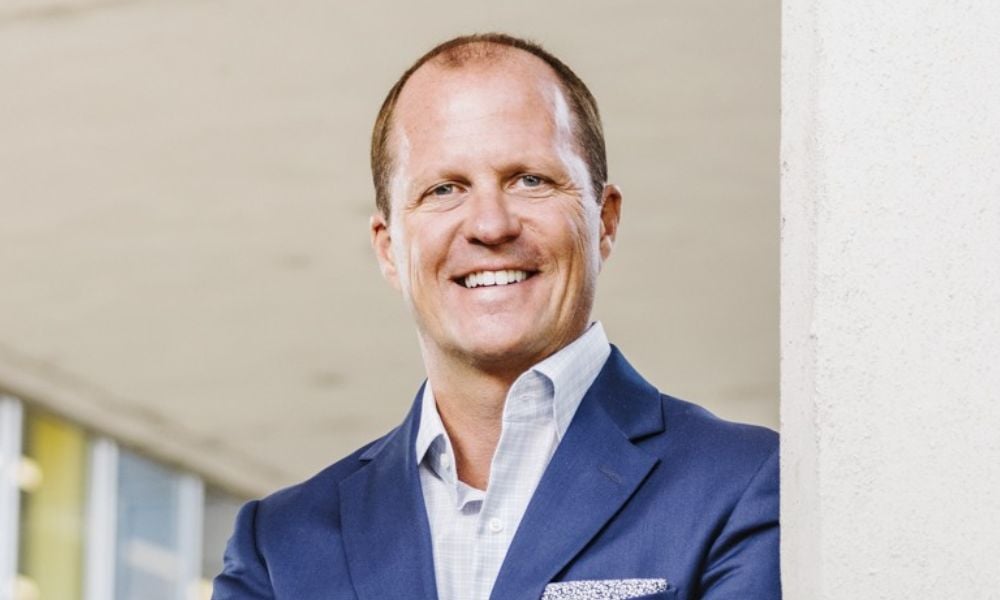
Brett Hoge, a veteran advisor based in Winston-Salem, North Carolina, has moved his $3 billion team from Truist Investment Services to Captrust Financial Advisors, a Raleigh-based RIA with roughly $1.3 trillion in assets under management and advisement. The decision, he said, came down to ownership culture: Captrust offers every employee a path to equity, a feature Hoge believes aligns the team's interests with clients over the long term.
The Hoge-Barrett Group, which includes advisors Alex Barrett, Josh Crane, Aaron Spivey, David Peterson, and Harry Cross, along with seven support staff and a portfolio manager, is Captrust's seventh team in North Carolina. The state has become a demographic magnet, drawing more new residents than any other in the latest Census Bureau estimates, and Captrust sees that growth as a pipeline for new clients.
Hoge, who started his career in 1999 and joined a Truist predecessor in 2008, said he weighed launching his own independent firm with private equity backing. But he concluded that building operations from scratch would delay the resource boost he wanted clients to feel immediately. “I didn't want a client to have more of the same or just in a different look,” he said. “I wanted them to immediately feel the impact of the resources, capabilities, everything that Captrust is able to provide us.”
Captrust's employee equity model is a key recruiting tool. According to Scott Matheson, managing director and head of client solutions, just over 68% of the firm's more than 2,000 employees hold a stake. “We put our money where our mouth is in terms of our equity,” Matheson said. “We share equity as a part of the consideration of acquisitions, so that we are in fact partners from day one.”
The firm also has outside investors, including Carlyle, which took a minority growth stake in 2023 and holds a board seat, and GTCR, which first invested in 2020 and still indirectly owns more than 25% of Captrust, according to SEC disclosures. This mix of internal and external ownership is increasingly common among large RIAs, and industry research suggests that larger firms are more likely to offer equity to incoming advisors.
Hoge, who turns 50 in March, said his team's youngest advisor is around 30, and he plans to grow the group by recruiting and training new talent. “We're open for business,” he said. “We're going to continue to grow the existing client base we've got, so to do that we've got to keep providing more talented advisors that can serve the growing complexity and needs for clients.”
Most of Captrust's assets are non-discretionary retirement plan money, with individual and high-net-worth clients accounting for about $96 billion at the end of 2025, according to its Form ADV. Hoge is registered with both Captrust and its affiliated broker-dealer, CapFinancial Securities, though wealth-focused advisors typically spend less than 10% of their time on brokerage work.
Matheson highlighted North Carolina's business-friendly environment and lifestyle appeal, noting that the state's population grew by nearly 150,000 in 2025, the third-largest increase after Texas and Florida. “There's fair state tax regimes and affordability that people care about, in addition to climate and livability,” he said. “So it's a growing state, which means that there's people moving here who are potential clients that we can serve and help.”
The move is part of a broader trend of advisors seeking ownership opportunities, as seen in Creative Planning's employee partner model and succession strategies that treat ownership as a growth tool. Captrust's recent acquisition of two Long Island firms further underscores its expansion appetite.