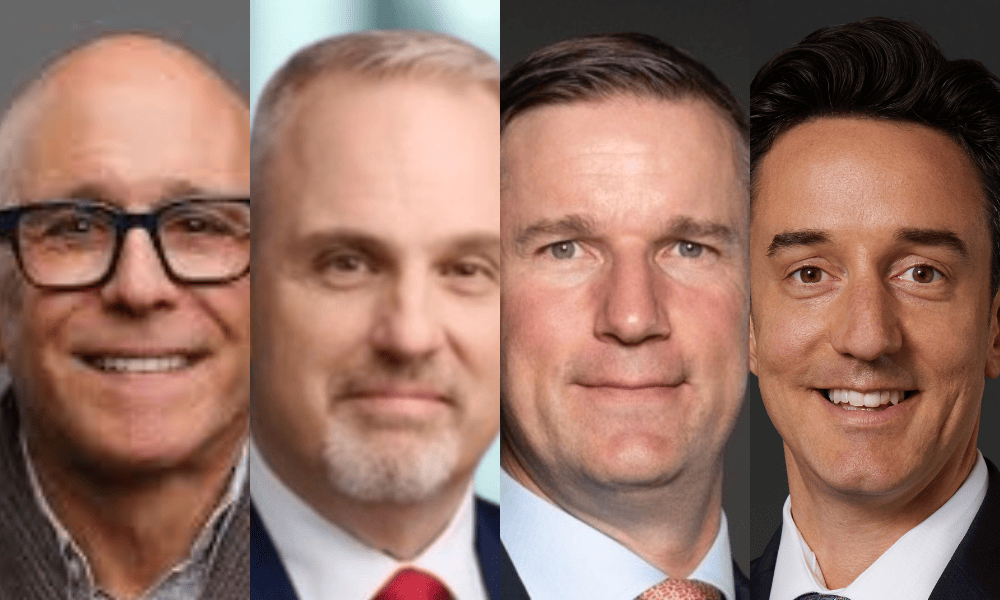
Wealth managers are steadily increasing client allocations to private markets, but the infrastructure supporting those allocations has not kept pace, according to Corastone chief executive and co-founder Rashad Kurbanov.
Kurbanov's company works with major Wall Street firms including Morgan Stanley, Fidelity, KKR and Apollo, building permissioned blockchain infrastructure designed to help private market products scale across wealth platforms.
Asked what is preventing private assets from scaling more broadly, Kurbanov told InvestmentNews that it’s about outdated systems rather than a lack of appetite among advisors or clients.
"The biggest challenge is that existing private market infrastructure is not built for scalable distribution. Much of the existing infrastructure was built for a different era," he said. "Most administrative processes still require manual documentation, bespoke integrations, fragmented data and workflows that require multiple parties to reconcile the same information across different systems."
He said that model breaks down once wealth managers try to extend private market access beyond a small pool of large institutions.
"That model works when volumes are limited and participation is concentrated among large institutions, but it becomes much harder when wealth managers are trying to deliver private market exposure to a broader client base," he said. "Subscriptions, capital calls, reporting, transfers, valuations and servicing events all create operational complexity. If those workflows are handled manually, firms face higher costs, slower processing, more exceptions and greater operational risk."
For Kurbanov, the constraint is not demand or product quality but whether firms can support that demand operationally.
"The issue is not advisor demand or product quality. The issue is whether the operating model can support that demand without adding unnecessary friction. To scale private markets across wealth platforms, the industry needs shared, standardized infrastructure that allows participants to transact, exchange data and manage lifecycle events with the same level of control and efficiency that investors expect in public markets," he said.
With partners spanning asset managers, wealth platforms and fund administrators, Corastone sits across several parts of the private markets ecosystem. Asked what common problem those institutions are trying to solve, Kurbanov said scalability sits at the centre of it.
"Asset managers want to reach more investors. Wealth platforms want to expand access while maintaining control over suitability, reporting and the client experience. Fund administrators and transfer agents want to process higher transaction volumes without relying on manual workarounds. Everyone is trying to solve a different part of the same problem: how do you make private markets easier to access, easier to administer and easier to manage across the full investment lifecycle?" he said.
He described Corastone's role as a neutral layer rather than a replacement for any single participant.
"That is why a neutral infrastructure layer is so important. We are not trying to replace any participant's role in the ecosystem. We are providing the connective tissue that allows those participants to work together more efficiently, while preserving their client relationships, operating models and regulatory responsibilities," Kurbanov said.
Corastone has built its platform on permissioned blockchain technology and Kurbanov believes this has advantages over traditional financial infrastructure.
"Corastone's private, permissioned blockchain technology provides all participants involved in a given transaction with a shared source of data, without requiring every participant to surrender control of their own systems," he said. "A permissioned network allows authorized participants to work from a common data layer, with clear rules around access, controls and auditability. That can reduce reconciliation breaks, remove duplicative data entry and support straight-through processing across workflows that have historically been handled through PDFs, spreadsheets, emails and file transfers."
He named subscription processing, investor onboarding, data exchange, fund administration and lifecycle servicing as the areas seeing the earliest gains.
Corastone recently partnered with Franklin Templeton to launch Private Market Model Portfolios. Kurbanov said the structure fits how many advisors already build portfolios, rather than asking them to adapt to a separate process for private assets.
"Model portfolios can be a major step forward because they fit the way many advisors already build and manage client portfolios. Historically, private markets have often been treated as a separate allocation requiring a separate subscription, separate reporting and a separate operational process. That creates friction for advisors and makes it harder to incorporate private assets consistently across client portfolios," Kurbanov said.
"By supporting a single-subscription, SMA-style structure, advisors can access diversified private market exposure within a professionally managed framework instead of navigating each underlying allocation separately. Over the next 18-24 months, we expect models and alternative products to be significantly more available in the SMA UMA model space than they are today," he said.
Advisor interest in private markets is often tempered by concerns over liquidity, reporting and operational burden. Kurbanov said technology cannot alter the underlying nature of private assets, but it can change how manageable they are to service.
"Technology cannot change the fundamental characteristics of private markets. These investments can be less liquid, more complex and more appropriate for certain investors than others. What technology can do is reduce the operational burden of managing them," he said.
For advisors seeking to incorporate private assets, Kurbanov recommends starting with model portfolios and working with platforms that have invested in modern infrastructure. He also pointed to Voya's recent addition of private equity, credit, and real estate to advisor managed accounts for 401(k) participants as a sign of growing institutional acceptance.
Looking ahead, Kurbanov expects the next 18 to 24 months to bring significant expansion of alternative products within SMA and UMA structures, as more asset managers and platforms adopt standardized infrastructure. He also noted that SEC scrutiny of private equity continuation vehicles underscores the need for transparent, auditable systems.