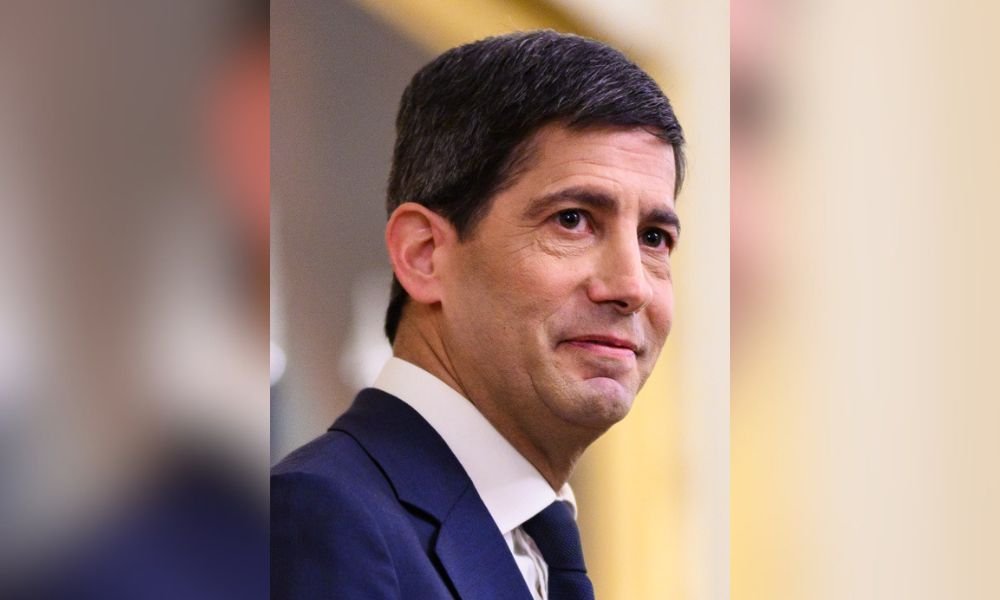
The Federal Open Market Committee voted unanimously Wednesday to maintain the federal funds rate at a target range of 3.5% to 3.75%, marking the first policy decision under new Chair Kevin Warsh. The decision, approved 12-0, keeps rates unchanged after three consecutive cuts last year, the last of which occurred in December 2025.
Advisors have been monitoring the central bank's stance closely as President Donald Trump has publicly urged lower rates. Warsh, who succeeded Jerome Powell on May 22 after being nominated by Trump, inherits an economy that the FOMC described as expanding at a solid pace despite elevated uncertainty tied partly to the Middle East conflict.
In its statement, the Committee noted that productivity growth and capital investment remain strong, job gains have kept pace with workforce expansion, and the unemployment rate has changed little. However, inflation continues to run above the Fed's 2% objective, reflecting supply shocks that have driven price increases in sectors including energy.
James Demmert, chief investment officer at Main Street Research, characterized the meeting as arguably the most important in recent memory, emphasizing that markets must adjust to Warsh's communication style. In a note released Wednesday, Demmert said he did not expect a rate change, adding that Warsh is likely to take time monitoring how inflation responds to the recent decline in oil prices. Demmert also suggested that any stock market volatility stemming from Warsh's commentary could represent a buying opportunity, given that underlying fundamentals remain intact.
The S&P 500 index edged up 0.04% following the announcement. Melissa Cohn, regional vice president of William Raveis Mortgage, noted that the decision was widely anticipated. With oil prices still elevated and inflation climbing, she said, there was no room for the Fed to move in either direction. Cohn added that while oil prices are declining as the war in Iran ends, it will take time for inflation pressures to ease, potentially giving the Fed and its new chairman an opportunity to cut rates later this year.
The Fed's long-term objectives remain unchanged under Warsh. Cohn emphasized that having a new chair has not altered the central bank's dual mandate of bringing inflation to the 2% target while maintaining maximum employment.
For advisors navigating this environment, strategies such as bucketing and private markets can help keep clients steady through volatility. Meanwhile, the broader context includes OPEC+ lifting quotas by 188,000 barrels per day for July as the Hormuz blockade keeps actual output at 33.19 million bpd, a factor that may influence energy prices and inflation. Additionally, the Federal Trade Court's striking down of Trump's 10% global tariffs could have implications for trade policy and economic growth.