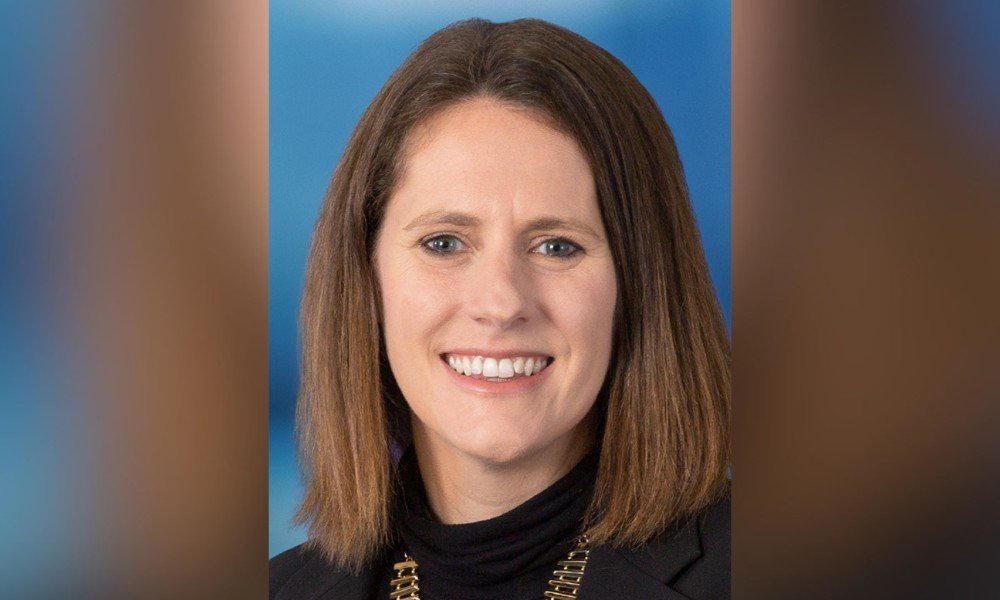
Franklin Templeton is accelerating its adoption of artificial intelligence across investment operations, deploying internal hackathons, a multi-agent copilot, and a structured framework to verify AI-generated outputs, according to Katrina Dudley, senior vice president of public market investments at Franklin Templeton Institute.
Speaking at a media event in New York City’s Flatiron district on Monday, Dudley said the firm’s AI strategy is driven from the top. “The message starts from the top … Jenny Johnson is extremely committed to AI and that messaging is coming from the top of the house,” she said, referring to Franklin Templeton’s CEO.
The asset manager has introduced several AI tools internally, including an analyst assistant and PM Copilot, which Dudley described as “a very new multi-agent technology.” The firm also uses Grommet, an investment engine coach within its multi-asset unit. These tools are part of a broader push to enhance efficiency, a trend seen across the financial advisory industry. For instance, Raymond James CEO Paul Shoukry recently noted that AI is improving advisor-client relationships but acknowledged its limitations. Similarly, Wells Fargo launched an AI-enhanced advisor gateway earlier this year.
To foster internal AI expertise, Franklin Templeton hosted an AI hackathon in January and a reverse-mentor hackathon that paired junior talent with senior leaders on AI problem-solving. The firm also established an AI champions network to promote knowledge sharing. “Different people are at different parts on that journey,” Dudley said. “I would say that we’re meeting people at where they’re at but pushing from behind.”
Other firms are pursuing similar strategies. Raymond James is using focus groups to roll out Rai, its new AI operations agent, while asset manager Sagard employs an AI coach. The industry-wide focus on AI comes as Kevin Warsh, President Donald Trump’s nominee to lead the Federal Reserve, touted the technology as a vital productivity tool during his confirmation hearing last week.
Franklin Templeton has implemented a company-wide AI framework to measure all AI initiatives. Dudley highlighted “pain points” where controls are applied, such as a reminder in the investment portal that urges users to “please verify” AI-generated information. This emphasis on human oversight aligns with broader compliance concerns, as seen in why an aging 401(k) menu is the next compliance flashpoint.
The firm’s multi-pronged approach reflects a commitment to balancing innovation with risk management. As AI tools become more prevalent, Franklin Templeton aims to ensure that human judgment remains central to investment decisions. “We have an AI framework against which we are measuring everything,” Dudley said.