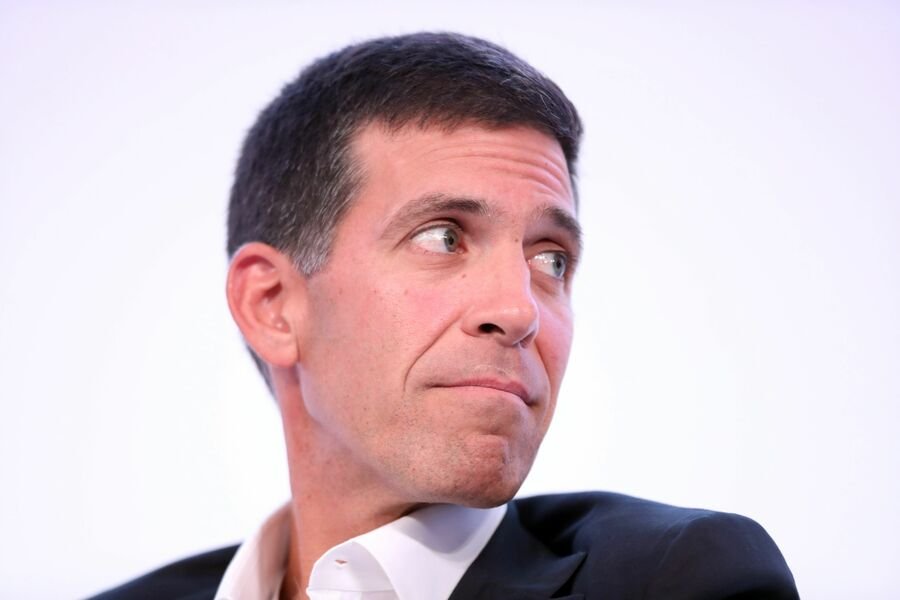
Goldman Sachs is laying the groundwork for a leadership transition that would end David Solomon's nearly decade-long tenure as chief executive and elevate President and Chief Operating Officer John Waldron to the top role. According to a report in The Wall Street Journal, the bank's board has discussed a plan for Solomon to step down, with Waldron taking over around the end of 2027 or in 2028. The discussions are ongoing, and the timeline could shift, but the board's approval could come within months, Reuters reported.
Under the arrangement being considered, Solomon would remain as executive chairman for one to two years after relinquishing the CEO title, ensuring a smooth handoff. Goldman's global head of communications, Tony Fratto, responded to the reports by noting that the board regularly discusses succession, as disclosed in filings, but emphasized that there is no definitive timeline. "Any assertions about timing are just speculation," Fratto said.
Waldron, who was named president and COO in October 2018, shares a similar career trajectory with Solomon. Both spent time at Bear Stearns before joining Goldman—Solomon in 1999 and Waldron in 2000. Waldron previously served as co-head of investment banking from 2014 until his elevation to the leadership team. In January 2025, Goldman awarded both executives retention bonuses of $80 million each in restricted stock, and Waldron joined the firm's board in early 2025.
Wells Fargo analyst Mike Mayo told Reuters he does not expect Waldron to alter the bank's strategic direction, noting that the two leaders have been driving Goldman's priorities together. This continuity is likely to reassure investors who have watched Goldman pivot toward wealth management and asset management under Solomon's leadership.
The expected transition at Goldman comes amid a broader wave of succession planning across major U.S. banks. JPMorgan Chase, for instance, has been preparing for the eventual departure of Jamie Dimon, appointing Doug Petno and Troy Rohrbaugh as co-presidents in June 2026 as part of a deliberate leadership process. Bank of America's Brian Moynihan, one of the longest-serving big-bank CEOs, faces similar shareholder pressure for a credible succession framework.
Goldman's wealth and asset management platform has grown to $1.9 trillion in client assets under current leadership, according to Solomon's 2025 annual letter to shareholders, published in March 2026. The firm has set a target of achieving annual long-term fee-based net inflows equivalent to 5% of the channel's long-term assets under supervision. This underscores how central the wealth business has become to Goldman's recurring revenue model, regardless of who occupies the CEO seat.
For financial advisors, the leadership change at Goldman is unlikely to disrupt the firm's wealth management strategy, which has been a key growth driver. The firm's focus on fee-based inflows and asset accumulation is expected to continue under Waldron, who has been deeply involved in these initiatives. As Raymond James consolidates its succession and capital units, and Hightower reshapes its leadership, the industry is watching how large institutions manage leadership transitions.
The succession plan at Goldman also reflects a broader trend in the advisory industry, where many senior advisors are planning to exit within five years, yet a significant portion lack formal succession plans. Goldman's approach—announcing a clear timeline and retaining the outgoing CEO in a transitional role—offers a model for other firms navigating leadership changes.