Financial advisors across the wealth management industry are fielding a surge of client inquiries about investing in high-profile private companies such as SpaceX, Anthropic, and OpenAI. The enthusiasm, fueled by media coverage and anticipation of public listings, presents a significant communication challenge for advisors in 2026: how to channel genuine interest in a transformative theme into a disciplined investment strategy without dismissing the opportunity outright.
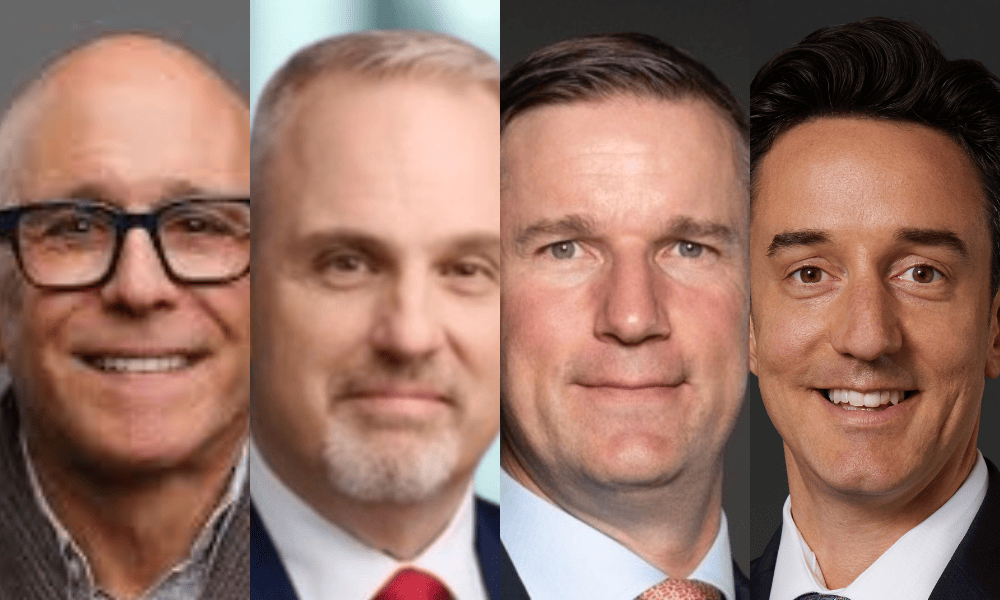
Three advisors who specialize in private markets, alternative investments, and tech equity compensation argue that the key lies in understanding where value is actually created—and what the data reveals about post-IPO performance. Their consensus: the most substantial gains are captured long before a company rings the opening bell.
Value Creation Shifts to Pre-IPO Phase
Brian Boswell, a wealth manager at Savvy Wealth, highlights a structural transformation in the IPO landscape. Twenty-five years ago, companies typically went public about four years after their first funding round. Today, that timeline has stretched to roughly ten years, with the average firm raising seven rounds of capital before listing. The top 25 venture-backed private U.S. companies now carry an average valuation of approximately $60 billion each, according to Boswell's estimates—value that was built entirely while they remained private.
"If your client only buys on the first day of trading, they've largely missed the part of the curve that built that value," Boswell said. "We'd rather own that growth on the way up, not after it's already been marked. For most clients the right answer isn't a single name like SpaceX or OpenAI—it's diversified, professionally managed access to a whole basket of late-stage private companies."
Boswell points to data from Jay Ritter, the Joseph B. Cordell Eminent Scholar Chair Emeritus at the University of Florida's Warrington College of Business, widely known as "Mr. IPO." Ritter's research shows that from 1980 to 2025, the average first-day return for U.S. IPOs was approximately 19%. However, over the subsequent three years, the average IPO underperformed the broader market by roughly 20%—or about 5.5 percentage points annually. "The day-one pop is exactly the scarcity rush you're writing about; the three years that follow are where the disappointment lives," Boswell said.
For clients seeking private market exposure, Boswell recommends diversified fund structures such as Coatue's Innovative Strategies Fund, which blends public and private holdings and counts Anthropic and OpenAI among its largest private positions. He is candid about the trade-offs: illiquidity, periodic valuations, and limited redemption windows—Coatue's fund offers quarterly liquidity of up to 5%. "Illiquidity and less transparency is the price of admission, and clients need to understand that going in," Boswell said.
AI Infrastructure Emerges as Next Opportunity
Matt Malone, head of investment management and president of the RIA at Opto Investments, agrees that the window for the most obvious AI names has largely closed for new investors at current valuations. "SpaceX, Anthropic, and OpenAI were much more interesting investments three or four years ago, when less capital was chasing them and valuations reflected uncertainty rather than consensus," Malone said. "While I would not bet against them, the early-stage, high-growth window is largely closed for those specific companies."
Malone's focus has shifted to what he calls the layer beneath foundation models: AI infrastructure businesses in security, edge inference, and specialized compute. As agent-based AI architectures replace simple query-response tools, the attack surface for enterprises has expanded significantly, and security infrastructure has not kept pace. Similarly, he expects a large share of AI inference will ultimately need to run at the edge, closer to where data is generated, rather than routing everything through centralized cloud data centers.
For clients asking about AI exposure through an IPO, Malone delivers a sobering message: the IPO is not an entry point but a liquidity event for earlier investors. Public market buyers absorb the scarcity premium on day one, and for high-profile listings with constrained floats due to lock-up schedules, that premium can be sharp in the short term, followed by price pressure as insider shares are released. "Getting in at Series D or E valuations, when a company has real revenue and a credible path, is a different risk-return proposition than buying at IPO pricing that already incorporates years of optimism," Malone said.
Tech Employees Face Concentration Risk
Annie Gottbehuet, managing partner at Mercer Advisors, brings a different perspective. Many of her clients are employees at the very companies generating headlines, which means the conversation is often about reducing exposure rather than adding it. "Employees of these firms are often in a position where they have extremely concentrated exposure to one company, or a small number of companies, and that's a very risky position to be in," Gottbehuet said. "For those clients our goal is often to reduce that concentration, and transition to a more diversified portfolio."
Gottbehuet's approach underscores a broader theme: the scarcity rush around high-profile IPOs can be a trap for both retail and institutional investors. Advisors who clearly explain the data on post-IPO underperformance, the illiquidity of private investments, and the concentration risks for tech employees are providing a valuable service. As the IPO pipeline for AI and space companies continues to build, the discipline to look beyond the day-one pop may separate prudent portfolios from those caught in the hype.