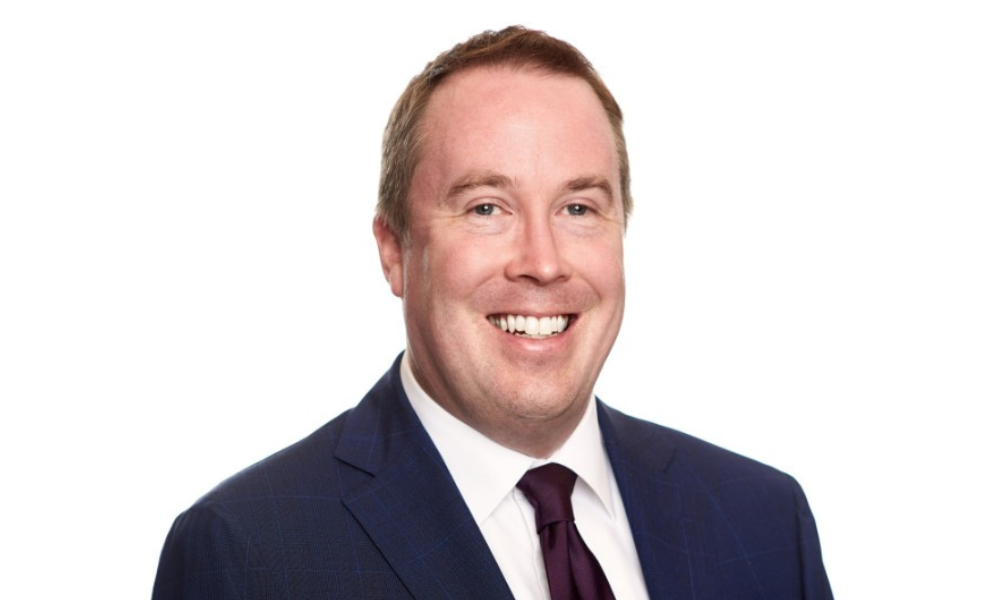
Doug Krupa, now partner and head of global wealth solutions in the Americas at KKR, traces his commitment to alternative investments to an unlikely source: the pension fund of New York City firefighters. Growing up in Rockland County in the 1990s, Krupa watched his father, a battalion chief in the FDNY and later head of the officers' union, work grueling 48-hour shifts during holidays for double overtime pay. That work ethic, he says, instilled a drive to make an impact in whatever industry he entered.
After graduating from SUNY Geneseo in 2000 with a finance degree, Krupa joined UBS PaineWebber as a financial advisor. Roughly half his client base consisted of New York City firefighters. He became fascinated by the FDNY pension fund's investment strategy, which allocated about 30% to private markets—a high figure for the late 1990s and early 2000s. "They were achieving higher actuarial rates and getting better outcomes," Krupa said. That early exposure planted the seed for his lifelong focus on expanding access to alternatives for individual investors.
Krupa's career path took him through Citi Salomon, where he oversaw equity and alternatives products, before joining Blackstone for eight years. At Blackstone, he helped develop the Blackstone Real Estate Investment Trust, broadening access to private real estate for individual investors. In 2019, he moved to KKR with a mandate to build out the firm's wealth management business and product lineup. Over three years, KKR developed core building blocks for private equity, infrastructure, real estate, and credit—both direct lending and asset-based finance. "Once we had that foundation, things really started moving at a supersonic pace," Krupa said.
KKR's push into wealth management has accelerated. In its fiscal first quarter, the firm reported that assets under management for its retail-focused K-Series products reached $38 billion, up from $21 billion a year earlier. Co-CEO Scott Nuttall described the private wealth initiative as a "multi-decade build." Earlier this year, KKR closed a $1.4 billion deal to acquire Arctos Partners, a sports team investor, signaling its intent to give mass-affluent and high-net-worth investors access to sports as an asset class.
Krupa emphasizes that KKR's approach is advisor-centric. "We don't start by talking about what our portfolio of products is," he said. "We start by asking the advisor, what do your clients not have in the portfolio? What are they asking for?" This philosophy reflects his belief that alternatives can fill gaps in traditional portfolios, particularly as younger investors show higher risk tolerance and seek diversification beyond public markets.
Looking ahead, Krupa sees opportunities in specialized areas such as digital infrastructure and tax-advantaged private-market strategies akin to direct indexing. "Can you create strategies similar to direct indexing or other tax-advantaged approaches using private markets? We're thinking about that," he said. As the wealth transfer accelerates—an estimated $83 trillion over the next two decades—advisors are increasingly turning to alternatives to meet client demands for yield, growth, and inflation protection.
Krupa's journey from a math-geek high schooler building computers to a leader at one of the world's largest private equity firms underscores the growing role of alternatives in wealth management. With KKR's K-Series products now spanning multiple asset classes and its sports-investment push via Arctos, the firm is betting that advisors will continue to embrace private markets as a core portfolio component.