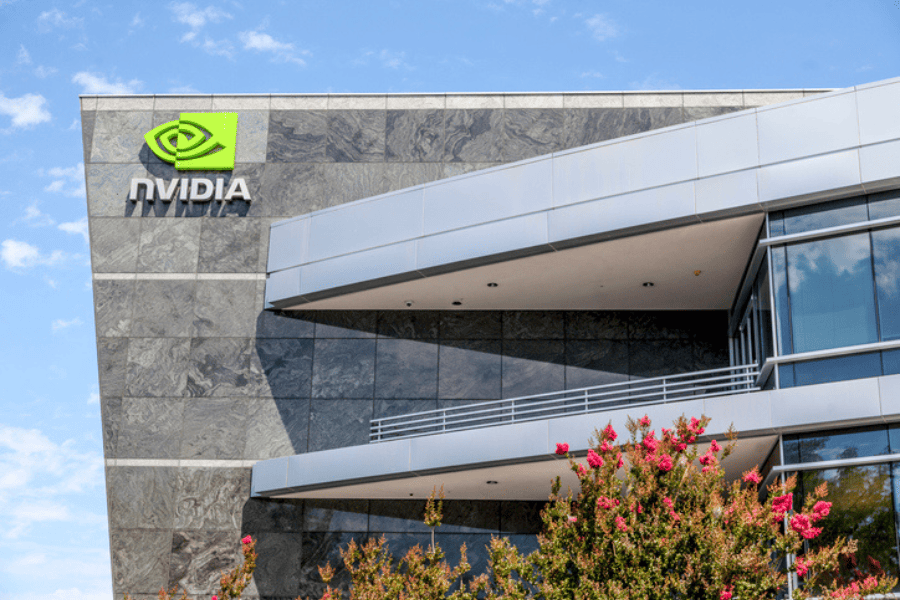
The Wall Street Journal's Leadership Institute, in collaboration with Bendable Labs, has released its first-ever Best Companies for the Future ranking, placing Nvidia at the top of a list that evaluates all S&P 500 constituents across 30 metrics. The index, which scores firms on AI readiness, innovation, talent readiness, financial fitness, supply-chain resilience, and corporate agility, underscores the dominance of technology giants in the artificial intelligence era. Nvidia secured the top spot in AI readiness, financial fitness, and agility sub-rankings, with Alphabet, Microsoft, Meta Platforms, and Cisco Systems rounding out the top five.
Despite the accolade, the chip sector experienced a sharp reversal on Friday. The PHLX semiconductor index fell 10.3%, its steepest single-day decline since March 2020, erasing approximately $1.3 trillion in market value across U.S.-traded semiconductor stocks. The selloff was triggered by a weak quarterly report from Broadcom, which ranked only 110th in the WSJ index despite its market size. Nvidia shares dropped roughly 6%, while Advanced Micro Devices—ranked 16th overall—fell nearly 11%, and Micron Technology tumbled 13%.
Ohsung Kwon, chief equity strategist at Wells Fargo, attributed the decline to overbought conditions in the semiconductor sector. "The semiconductor sector was way overbought. That's why we're seeing the sell-off. I don't think it's the end of the (semiconductor) bull market," Kwon told Reuters. The volatility highlights the risks inherent in even the most AI-ready companies, as external market forces can quickly shift valuations.
Nvidia also announced a partnership with South Korea's LG Group to build an AI factory encompassing robotics, autonomous driving, data center technologies, and GPU cloud services. The collaboration aims to integrate model development, robot simulation, edge deployment, and factory-scale digital twins into a unified workflow, further solidifying Nvidia's position in the AI ecosystem.
Beyond technology, the WSJ ranking revealed notable performers in other sectors. Equinix led the innovation sub-ranking, ahead of Nvidia and Microsoft. Texas Pacific Land topped the financial fitness category, followed by Nvidia and Alphabet. Delta Air Lines, despite ranking only 103rd overall, led the talent readiness sub-index. Moderna headed the resilience category, with Amgen and Marsh & McLennan following. Intel placed second in AI readiness, behind Nvidia, with Alphabet third.
Financial sector firms also made strong showings in the overall top 25. Mastercard ranked seventh, S&P Global thirteenth, and Visa fifteenth. Drugmakers Johnson & Johnson and Eli Lilly took the 20th and 22nd spots, respectively. Bendable Labs chief data scientist Kelly Tang noted that the overall results broadly align with market valuations. "If our general drift is in line with what the stock market is saying—that these are the most valuable companies—great," Tang said.
The ranking comes amid a broader push by asset managers to capitalize on AI-driven opportunities. For example, Pacer ETFs recently launched two AI-driven equity funds tracking S&P 3AI indices, while the Roundhill Memory ETF surpassed $1 billion in assets in just 10 days, driven by AI chip demand. These developments underscore the market's appetite for AI-related investments, even as volatility persists.
For financial advisors, the WSJ ranking offers a framework for evaluating companies' long-term positioning in an AI-driven economy. However, the recent selloff serves as a reminder that even top-ranked firms are not immune to market swings. As the AI landscape evolves, advisors may need to balance enthusiasm for innovation with disciplined risk management.