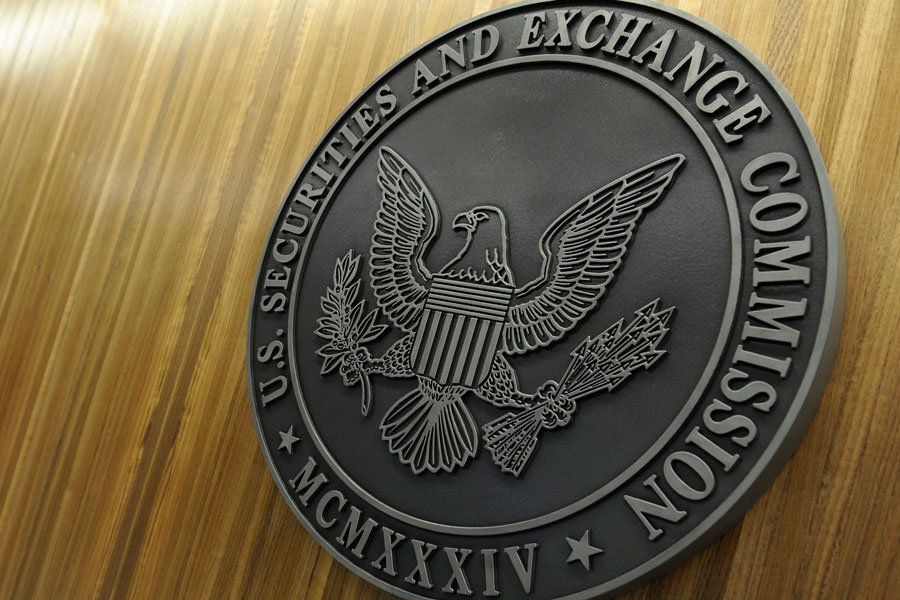
The subreddit that helped fuel the 2021 GameStop short squeeze has entered the debate over one of the most consequential securities regulation proposals in decades. r/WallStreetBets, a community of roughly 18 million self-described retail investors, submitted a formal comment letter to the Securities and Exchange Commission opposing File No. S7-2026-15, which would permit publicly traded companies to elect semiannual financial reporting in place of the current quarterly 10-Q requirement.
The unsigned letter, written in the community's characteristic sardonic tone, has drawn coverage from TechCrunch, Bloomberg Law, and Business Insider. TechCrunch described it as the sharpest objection filed among all public comments to date.
"Institutional investors have expert networks, channel checks, alternative data, satellite imagery of retailer parking lots, credit card panel data, and direct management access through conferences and one-on-one meetings that cost more than most of our portfolios. We have the 10-Q," the letter states. The community argues that quarterly filings are not merely a disclosure formality but the primary mechanism through which retail investors access material financial information that institutional players obtain through far costlier channels. Reducing that frequency, the letter contends, would not eliminate information asymmetry but widen it.
The SEC's proposal, revived under the current administration, would give companies the option each year to choose between filing one annual report and three quarterly ones, as currently required, or one annual report and a single semiannual filing. Critics argue that even optional adoption would create a two-tiered disclosure environment that disadvantages ordinary investors.
The proposal has opened a deep rift in the financial industry. Hedge funds Two Sigma Investments and D.E. Shaw have pushed back, joining Citadel and Fidelity in raising concerns at the SEC's investor advisory committee meeting in March. Those firms warned that reduced disclosure frequency would heighten market volatility, increase the cost of capital for affected companies, and erode the accuracy of market valuations. The Managed Funds Association submitted its own comment letter warning that optional quarterly reporting would lead to inconsistent disclosure practices across the market.
On the other side, JPMorgan Chase has broadly supported the proposal as a mechanism to strengthen capital markets, though the bank noted it would continue providing quarterly guidance to analysts and investors regardless. The American Securities Association also welcomed the proposal, with CEO Chris Iacovella saying it gives companies flexibility without mandating a one-size-fits-all approach.
Despite the political heat, market participants broadly expect the rule change to have limited practical uptake among large-cap issuers. Sam Rines, macro strategist at WisdomTree Asset Management, told Reuters that any established company making this shift would become a candidate for being downsized or removed from portfolios. Mike Reynolds, vice president of investment strategy at Glenmede, echoed that view plainly: "Our expectation is that the vast majority of companies will continue to report quarterly." Jack Ablin, chief investment strategist at Cresset Wealth, acknowledged the administrative burden but noted that as a portfolio manager, more information is always better.
The argument for lighter-touch reporting may stick more among smaller issuers. In a white paper, Nasdaq argued that quarterly reporting is disproportionately burdensome for small and mid-cap companies. Some market participants suggest that firms contemplating an initial public offering, particularly in sectors like biotech where multi-year research cycles can make quarterly metrics misleading, could find the semiannual route appealing.
The WallStreetBets letter argued that the SEC's architecture of mandatory periodic disclosure was built specifically in response to the information failures that preceded the 1929 crash and led to the Securities Exchange Act of 1934. "Cutting the frequency of mandatory disclosure in half is not a technical adjustment to a reporting form. It is a partial unwinding of one of the foundational compromises of the 1934 Act," the letter states. For his part, SEC Chair Paul Atkins has indicated the agency wants the market to dictate the optimal reporting frequency based on factors such as the company's size and investor base.
Advisors should note that the debate touches on core portfolio management concerns. As recent market volatility has shown, timely information is critical for decision-making. Meanwhile, platforms like eToro continue to expand retail access to markets, underscoring the importance of disclosure parity. For advisors focused on long-term strategy, the outcome could affect how they evaluate company fundamentals, as Berkshire Hathaway's recent moves demonstrate the value of consistent reporting.