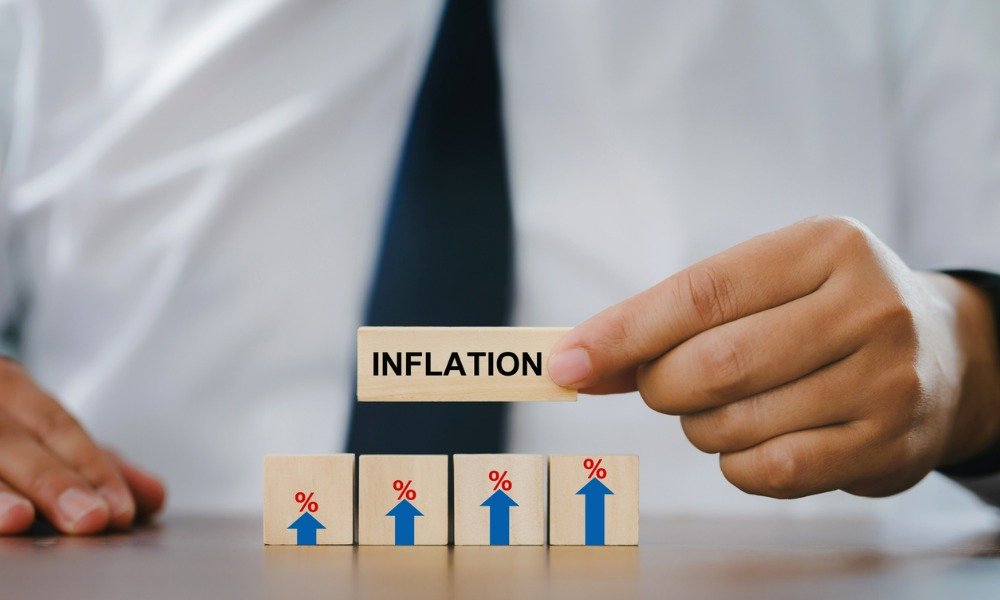
The Senate confirmed Kevin Warsh as Federal Reserve chair on Wednesday by a 54-45 vote, the narrowest margin for any central bank head in modern history. The confirmation came on the same morning the Bureau of Labor Statistics reported that the producer price index rose 6% year-over-year, with services prices climbing 1.2% month-over-month—the largest monthly gain since March 2022. Market-implied odds of a rate hike by year-end jumped to 39%, according to CME FedWatch data.
For registered investment advisors, the immediate question is not whether Warsh is qualified but whether the economic environment allows him to deliver the lower rates that many clients expect. The data suggests the answer is no—at least not this year.
Stagflation warnings resurface
Bridgewater Associates founder Ray Dalio warned two weeks ago that Warsh should resist cutting rates, arguing the U.S. has entered a stagflationary period. “We are certainly in a stagflationary period,” Dalio told CNBC. “Certainly, you would not cut interest rates now. You will lose your credibility.” Stagflation—slowing growth combined with persistent inflation—creates a dilemma for the Fed’s dual mandate of price stability and maximum employment. When those goals conflict, every policy decision becomes a trade-off that tests the chair’s credibility.
Wednesday’s PPI data reinforced Dalio’s warning. Trade services margins rose 2.7% in March, reflecting tariff costs passing through the supply chain. Unlike energy-driven inflation, tariff inflation is structural and unlikely to reverse quickly. The April CPI report showed a 0.6% monthly rise and a 3.8% annual rate, further confirming sticky inflation.
Advisor views diverge
InvestmentNews’ coverage of RIA reactions to Dalio’s warning found a split. Edison Byzyka, chief investment officer at Credent Wealth Management, called the stagflation case “simply not credible” given labor market resilience and strong ISM services readings. But Sam Miller, executive vice president of investment strategy at Signature Estate & Investment Advisors, offered a middle ground: “Growth is slowing from a strong starting point, while inflation has proven stickier than expected, particularly in services and energy-related areas.” That framing aligns with Wednesday’s PPI data.
Political constraints and FOMC dynamics
Warsh’s confirmation was the most partisan in Fed history. The Senate Banking Committee advanced him 13-11 along party lines, and only one Democrat—John Fetterman of Pennsylvania—crossed party lines to support him. The 54-45 vote was narrower than Janet Yellen’s 56-26 tally in 2014. At his April confirmation hearing, Warsh criticized the Fed’s post-COVID easing, saying, “After Covid, when prices went up to the tune of 25-to-35% for virtually all deciles of the American people, that’s an indication that the Fed missed its mark.”
That rhetoric now constrains him. A chair who labeled prior easing a policy error cannot cut rates amid 6% wholesale inflation without validating critics who warned his confirmation was politically motivated. Former Chair Yellen noted that even if Warsh wants to move, the FOMC includes 11 other voters who may not defer. “I really don’t see the FOMC accepting this in the short run,” she said.
Portfolio implications for advisors
For advisors managing duration risk, the conventional expectation of lower rates by mid-2026 is now in doubt. As earlier reports noted, the FOMC was already fractured, with a third camp wanting to keep rate hike options open. That fracture has widened with the inflation data. Ryan Swift, chief U.S. bond strategist at BCA Research, warned: “If the first things we hear from him are dovish arguments about how the Fed can cut interest rates, I think that’s going to be a big problem.”
The InspereX survey found that geopolitics, volatility, and inflation top advisor-client concerns for the second half of 2026. With PPI running hot and the Fed chair constrained by both data and politics, advisors may need to adjust fixed-income allocations and reconsider the timing of rate-sensitive positions.