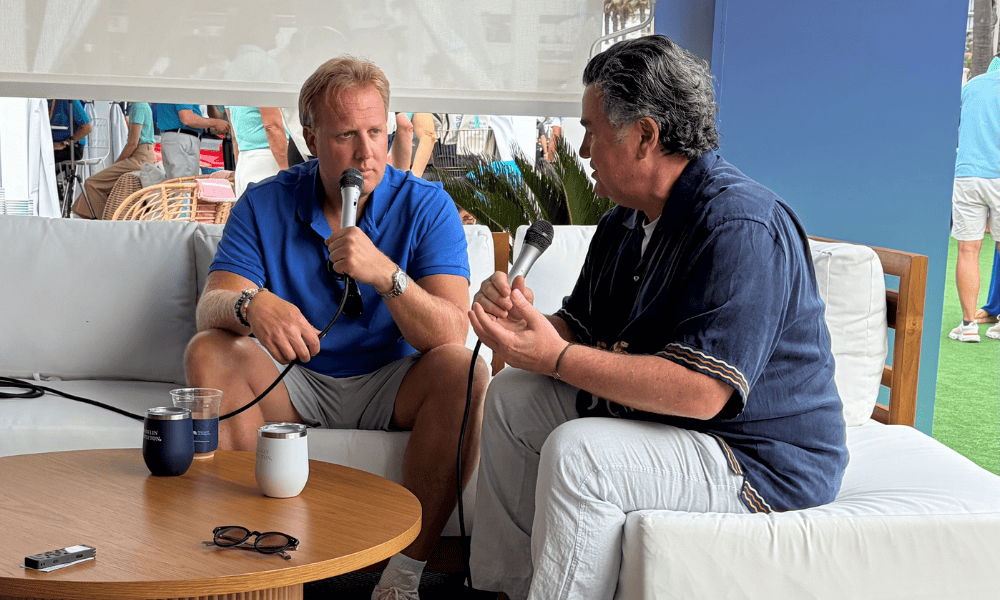
At the Future Proof festival in Huntington Beach, Ritholtz Wealth Management CEO Josh Brown offered an update on the firm's unconventional succession strategy, which he says is designed to build a multi-generational enterprise rather than set up a future sale. Speaking with InvestmentNews on Wednesday, Brown described the plan—announced in January—as a deliberate departure from the private-equity playbook that has become common across the RIA industry.
The succession plan involves Chief Investment Officer Barry Ritholtz selling a portion of his shares to create equity for 29 employees. Brown emphasized that the firm's goal is to expand employee ownership over time, with eligibility tied partly to tenure. "Our goal is to create as many employee shareholders as we can," he said. The firm, co-founded by Brown and Ritholtz in 2013, has notably resisted outside capital, a stance that Brown says sets it apart.
"I think we surprised a lot of people in the industry," Brown said. "Most firms, once they get into the outside capital game, the outside capital wants to remain in motion." He contrasted the firm's approach with private equity investments, which typically aim to boost profitability and revenue before seeking a larger exit. "That's perfectly fine—we're just in a very different game," he added.
The firm's asset growth underscores its momentum. At the time of the succession announcement, Ritholtz Wealth Management oversaw more than $7.6 billion in assets; that figure has since climbed to $9.4 billion. Brown attributes part of this growth to the stability and alignment that employee ownership fosters, which he says signals to both advisors and clients that the firm is built for the long haul.
Succession planning remains a critical challenge for advisory firms, with many owners nearing retirement. A recent Edward Jones survey found that 59% of senior advisors plan to exit within five years, yet 40% lack documented succession plans. Brown's approach offers a contrast to the industry norm, where aligning value, liquidity, and succession plans early is often advised.
Brown spoke after recording an episode of his Talking Wealth podcast with Roger Paradiso, executive chairman of O'Shaughnessy Asset Management and global head of custom client portfolios at Franklin Templeton. Walking through the festival crowds, Brown noted that the number of equity shareholders in the plan will continue to expand each year, as more employees become eligible based on tenure and other factors.
"We're thinking about 10 years and 20 years, and we're thinking about developing the talent of the people that are starting their careers with us," Brown said. "We're thinking about their runway." He acknowledged that many firms talk about long-term commitment, but few take concrete steps. "Anybody can stand on a stage or go on LinkedIn and say that," he added. "Not everybody can actually do something where they put their money on the table and align their own interests in that direction."
The Ritholtz plan stands in contrast to other industry moves, such as Kovack's private succession exchange for its 400 advisors, which provides a marketplace for internal transitions. While Kovack's model offers liquidity, Ritholtz's approach focuses on broad-based employee ownership as a retention and succession tool.
Brown's comments come as the industry grapples with a wave of retirements and the $124 trillion wealth transfer that is reshaping client demographics. For Ritholtz, the succession plan is not just about leadership continuity but about creating a culture where employees have a direct stake in the firm's future. As Brown put it, "Formalizing that succession plan was a major signal to both our advisors and to our clients that we really do think of ourselves as a forever firm."