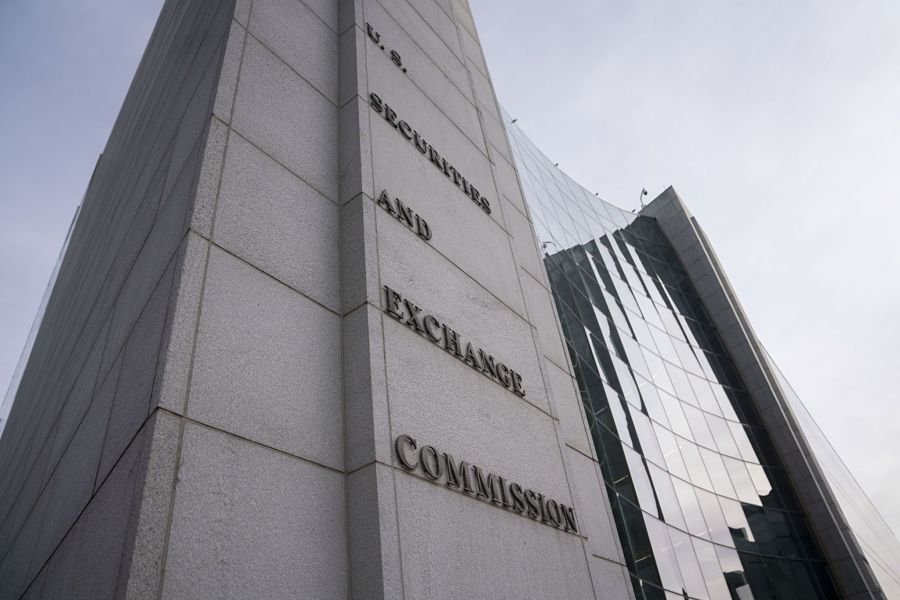
The Securities and Exchange Commission has initiated a 60-day public comment period regarding exchange-traded funds that invest in novel asset classes or employ unconventional strategies. This request directly addresses pending applications for prediction-market ETFs, which have been stalled since early May.
The comment window, effective upon publication in the Federal Register, allows financial advisors, issuers, and other market participants to formally provide input before the agency determines how to regulate these products. In a statement Tuesday, SEC Chairman Paul S. Atkins emphasized the need for public engagement to balance innovation with investor protection as the ETF market evolves.
Brian Daly, director of the SEC's Division of Investment Management, highlighted the rapid growth of the ETF market, which expanded from roughly $4 trillion in assets in 2019 to over $12 trillion by the end of 2025. "As ETFs continue to grow and novel strategies emerge, public engagement is essential to answering key questions to make the next years of development a success," Daly said.
The SEC's request focuses on three broad areas with about two dozen questions. One section examines whether a fund investing primarily in non-securities assets, such as event contracts, can qualify as an investment company under the Investment Company Act's "Subjective Test." Another area explores whether novel ETFs' underlying assets disrupt the arbitrage mechanism that keeps share prices aligned with net asset value. The SEC also considers whether the standard 75-day and 60-day effectiveness windows provide sufficient review time for genuinely novel structures.
In February, Roundhill, Bitwise, and GraniteShares filed applications for prediction-market ETFs, expecting automatic effectiveness under the 75-day rule. However, in early May, the SEC requested additional details on fund mechanics and disclosures, effectively pausing the approvals. Todd Sohn, chief ETF strategist at Strategas Securities, noted that such delays are typical for new asset classes entering the ETF wrapper. GraniteShares CEO Will Rhind acknowledged that innovative products often require extra scrutiny on liquidity and investor protections.
Analysts remain divided on the potential of prediction-market ETFs. Andres Rincon and Casey Yang of TD Securities argued that these products could allow institutions to hedge event risk, such as elections or rate decisions, while retail investors could access probability-based trades through brokerage accounts. However, they noted unresolved jurisdictional issues between the SEC and the Commodity Futures Trading Commission, as prediction markets straddle securities regulation, derivatives oversight, and gambling law. Political prediction markets raise additional concerns about manipulation and election integrity.
Jeffrey Ptak, managing director for Morningstar Research Services, recommended rejecting the products outright. He argued that event contracts carry a zero percent expected return at entry, unlike stocks or bonds that compensate for risk over time. Ptak also flagged that the proposed funds would likely layer expense ratios on top of swap-based financing costs, as most filings plan to use total return swaps rather than direct holdings. "These proposed products seem like the antithesis of [ETFs' role as a cheap, reliable gateway to global capital markets]," Ptak wrote.
The SEC's review also encompasses other novel ETF categories, including crypto assets, leveraged strategies, single-stock products, and private-asset funds. The agency's decision could have broader implications for the ETF industry, which has seen record launches in 2025, as noted in a recent report on Active ETFs Fuel Record Launches in 2025, But Closure Wave Looms for Subscale Funds. Additionally, the rise of prediction markets is highlighted by Cboe's launch of regulated binary options on the Mini-S&P 500.