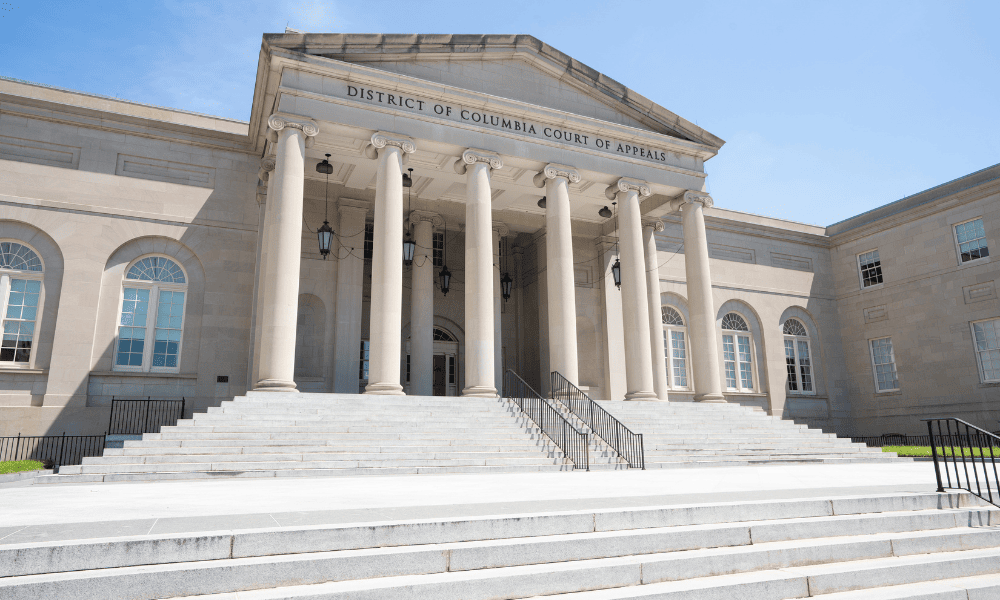
On June 16, the U.S. Court of Appeals for the Sixth Circuit handed FINRA a victory in Smith v. SEC, affirming that an unregistered owner of a broker-dealer can be held accountable by the self-regulatory organization. But the court's parting observations about the right to a jury trial could reverberate across the industry.
Eric S. Smith founded Consulting Services Support Corporation (CSSC) in 1998, serving as its chairman and CEO. Although a CSSC subsidiary was a FINRA-registered broker-dealer, Smith never personally registered, believing that staying out of day-to-day securities activities placed him beyond FINRA's reach. The court's opinion, however, detailed Smith's increasing involvement between 2010 and 2015, including direct management of three debt offerings and preparation of offering documents that contained false or misleading statements about CSSC's revenue prospects and financial condition. Four investors lost $130,000 in the scheme.
FINRA's examination and investor complaints led to charges against Smith for violating Section 10(b) of the Securities Exchange Act and Rule 10b-5, among other rules. The regulator ordered $130,000 in restitution to victims—or to FINRA if victims could not be located—and barred Smith from associating with any member firm. The SEC affirmed the sanctions.
On appeal, Smith did not challenge the factual findings but argued that FINRA, as a private entity, lacked authority to discipline someone who never joined it. The Sixth Circuit disagreed, citing the statutory definition of “persons associated with” a member firm. Because Smith controlled a member firm, he fell within FINRA's jurisdiction, regardless of his registration status.
More provocatively, Smith invoked the Supreme Court's 2024 decision in Jarkesy v. SEC, which held that the Seventh Amendment entitles defendants to a jury trial in SEC enforcement actions seeking civil penalties. Smith argued that FINRA's in-house proceedings similarly violated his rights. The court declined to rule on the issue because Smith failed to raise it before the SEC, but the majority noted that he “may well have been entitled” to a jury trial. Judge John K. Bush wrote separately to question whether Congress can force brokers to waive jury trial rights as a condition of doing business. Judge Eric L. Clay cautioned against addressing a question the court could not decide.
For financial advisors and compliance teams, the ruling offers practical takeaways. First, controlling a member firm brings an individual under FINRA's jurisdiction even without personal registration. Second, constitutional objections must be raised early in administrative proceedings or they are forfeited. Third, the in-house enforcement model faces renewed scrutiny, as federal judges signal discomfort with its compatibility with the Seventh Amendment.
The decision also intersects with other regulatory developments. In a related case, the Delaware Chancery Court recently tested revised governance statutes in a shareholder pay challenge, while the Supreme Court stripped activist investors of a key tool in closed-end fund battles. Meanwhile, a North Carolina business court invalidated overbroad non-compete clauses at a wealth firm, and a FINRA panel ordered Arkadios Capital to pay $2.7 million over a Ponzi scheme involving an advisor's father.
The Smith case underscores that FINRA's reach extends to unregistered owners who exercise control, and that constitutional challenges to the regulatory apparatus are gaining traction. Advisors should monitor how courts resolve the jury trial question, as it could reshape enforcement proceedings for broker-dealers nationwide.