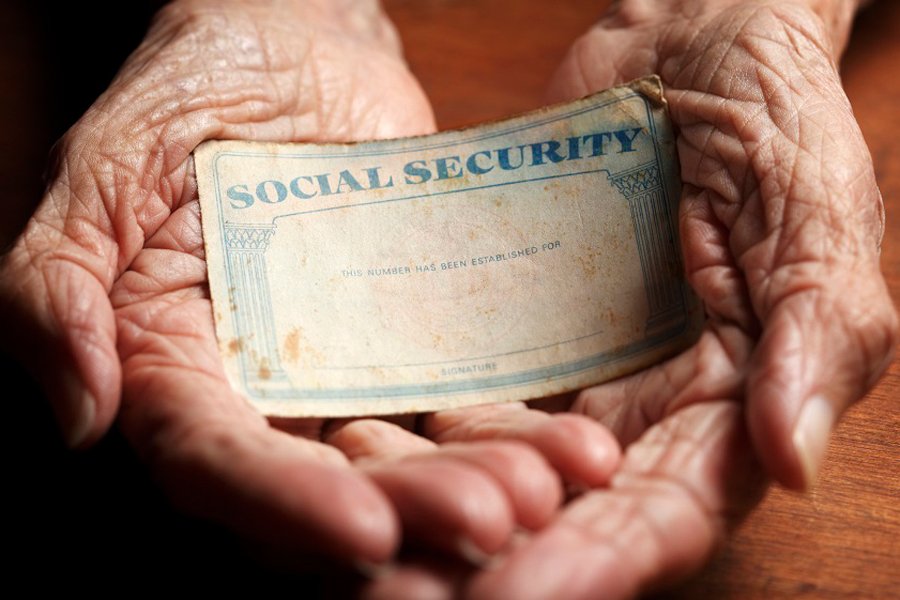
The Social Security Board of Trustees released its 2026 Annual Report to Congress this week, keeping the projected depletion date for the combined Old-Age and Survivors Insurance (OASI) and Disability Insurance (DI) trust funds at 2034, unchanged from last year's estimate. At that point, the program would be able to pay only 83% of scheduled benefits, according to the report.
The combined reserves declined by $160 billion in 2025, falling to $2.56 trillion. Total expenditures from the trust funds reached $1.61 trillion last year, while total income—including interest—amounted to $1.45 trillion. This gap has widened steadily since costs first exceeded non-interest income in 2010. The projected actuarial deficit over the 75-year long-range period now stands at 4.42% of taxable payroll, up from 3.82% in the prior year's report.
The OASI trust fund, which exclusively handles retirement benefits, faces a more immediate deadline. Its reserves are projected to be depleted in the fourth quarter of 2032, at which point 78% of benefits would remain payable. The Congressional Budget Office earlier this year estimated exhaustion by 2032, one year sooner than its previous calculation.
New York-based retirement savings provider PensionBee released its 2026 Social Security Shortfall Index, which quantifies the impact of a 22% benefit reduction—the cut projected once the OASI fund runs dry. For a new retiree receiving $2,080 monthly, that translates to a $458 monthly income reduction, or roughly $5,491 less per year. To offset that gap, PensionBee calculates that pre-retirees would need to accumulate an estimated $137,280 in additional personal savings, assuming a 4% annual withdrawal rate.
The analysis shows that younger workers face even steeper challenges. A 55-year-old would need to save approximately 3.5 times more per month than a 25-year-old to compensate for the same benefit reduction, given less time in the market. For today's 25-year-olds—Gen Z workers retiring around 2068—the projected benefit reduction rises to 33%, requiring an estimated $205,500 in additional savings.
This year's projections incorporate the effects of recent federal legislation. The 2025 Social Security Fairness Act, which expanded benefits for certain public-sector workers, was included in last year's report. The 2026 figures also reflect tax changes from the One Big Beautiful Bill, including the permanent extension of the 2017 tax cuts and an enhanced senior deduction, which reduce income tax revenue collected on Social Security benefits.
Frank J. Bisignano, Commissioner of Social Security, stated in a release: "To protect the promise of Social Security, it is important for lawmakers and the Social Security Administration to work together to ensure the trust funds continue to provide financial stability now and for future generations."
PensionBee's projections draw on the SSA's year-by-year income and cost data from the 2026 Trustees Report. The deficit widens with each successive generation, the firm notes. Romi Savova, founder and CEO of PensionBee, commented: "For millions of Americans, Social Security is the foundation of retirement. Every year Congress delays action, the catch-up cost shifts further onto individual workers, most of whom paid into a system for decades. While the overall program is safe, cuts to benefits are shockingly costly."
According to PensionBee, roughly 40% of Americans rely on Social Security for the majority of their retirement income, and one in seven depend on it for 90% of their total income. Advisors may want to review how these projections affect client retirement plans, particularly for those nearing retirement. For further context, see Social Security Trust Fund Depletion by 2032 Could Trigger 24% Benefit Cut, Varying by State and Student Loan Debt Poses Growing Threat to Retirement Security for Older Americans.