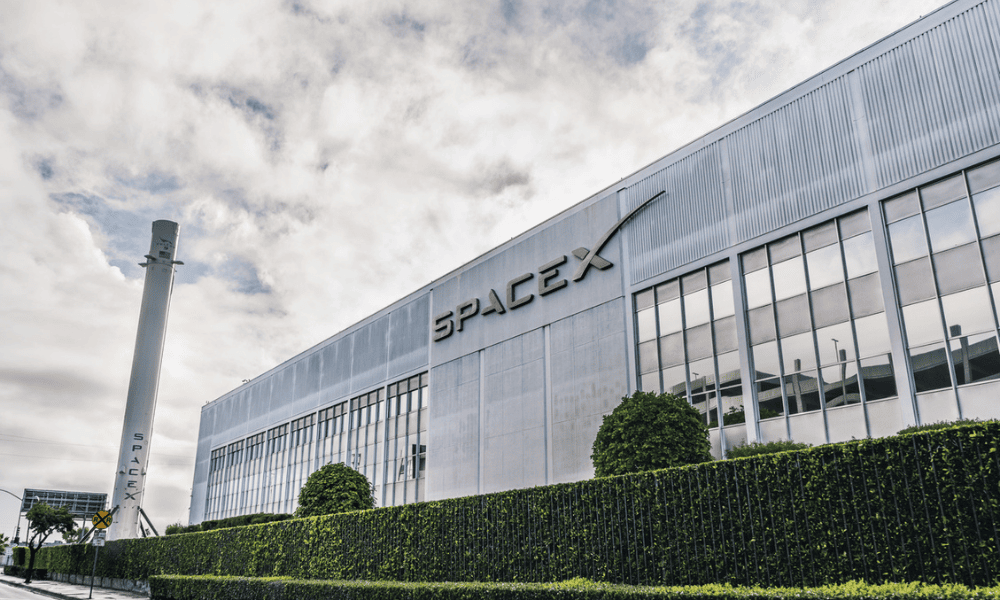
SpaceX's post-IPO collapse, which wiped out roughly $400 billion in market capitalization in under two weeks, is sending shockwaves beyond the rocket maker itself. Christopher Della Fave, senior vice president at Texas-based investment bank Post Oak Group, argues the selloff signals a broader market reckoning for artificial intelligence stocks that have soared on promise rather than profit.
"This is a liquidity grab, plain and simple," Della Fave told InvestmentNews. "A lot of early insiders were able to sell the moment the stock went public, and when that much paper hits the market at once, you get exactly this kind of move." SpaceX shares, priced at $135 on June 12, briefly hit an intraday high of $225.64 before sliding back near $150. Della Fave dismisses the spike as euphoria, calling the pullback a buying opportunity rather than a warning.
The numbers underscore his concern. At its peak, SpaceX traded at roughly 94 times trailing revenue, compared with about 23 times for Nvidia, while posting a net loss of $4.94 billion in 2025. "Most of AI is overvalued right now," Della Fave said flatly. "You can't pay multiples like that on a story indefinitely." He distinguishes between overvaluation and a bubble burst, but warns that the market is now demanding evidence of earnings, not just compelling narratives.
Della Fave dismisses macro factors like interest rates or Federal Reserve policy as the primary driver. "This is the market looking at AI valuations and asking a simple question: are these inflated like everything else in the space?" he said. "I see it as tech getting questioned on its own merits." He cites data from the Bank of America Institute showing only about 3% of its customers pay for AI services, mostly households earning more than $125,000 a year. "Billions are going into the build, and almost no one's paying yet," he noted.
For advisors navigating the AI trade, Della Fave advises focusing on companies with tangible results. "Money is moving toward companies that can point to something tangible and away from anything that's just an idea with a good name," he said. "Back the build, not the pitch." He recommends evaluating multiple metrics: revenue acceleration, gross margins, cash burn, customer retention, and a credible path to profit. "If a valuation only holds when you take the rosiest read on every one of those at once, that tells you everything," he added.
Despite the turbulence, Della Fave does not expect the IPO pipeline to slow. "If anything, this speeds the pipeline up," he said. "There is so much capital being poured into this space that a couple of rough trading weeks don't change the math." He notes that SpaceX's bankers were preparing to meet investors about a bond offering of at least $20 billion within a week of the IPO to fund AI expansion. The lesson for companies: manage float and insider selling to avoid handing the market a reason to gap the stock down.
Looking ahead, Della Fave is monitoring three factors over the next six to twelve months: SpaceX's technical support and resistance levels, any regulatory movement on AI that could reprice the entire group overnight, and the midterm elections, which will set the policy backdrop. For advisors, the key takeaway is that the AI trade is entering a phase where fundamentals matter more than ever. As Della Fave put it, "The market is finally asking hard questions about whether AI-driven valuations were ever grounded in reality."