SpaceX, the aerospace company led by Elon Musk, made its public market debut Thursday in what is now the largest initial public offering in history. The company sold 555.56 million shares at $135 each, raising $75 billion and surpassing Saudi Aramco's $25.6 billion IPO in 2019. Trading on the Nasdaq under the ticker SPCX, shares opened at $150 and have since climbed to around $156, giving the company a market capitalization of approximately $1.77 trillion.
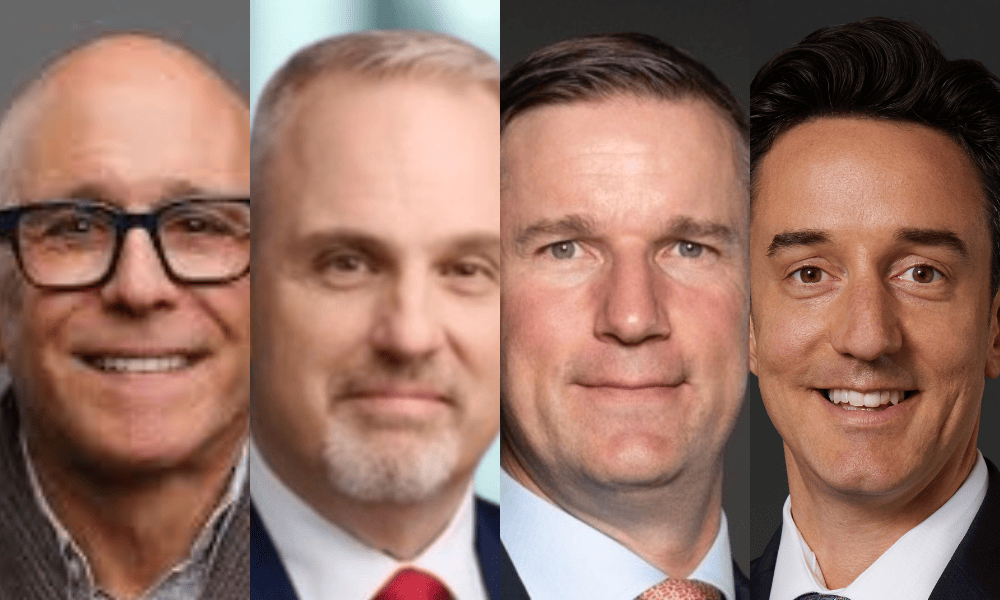
Despite the fanfare, some market observers recommend that financial advisors and their clients proceed with caution. John Belton, portfolio manager at Gabelli Funds, described SpaceX as "the ultimate growth stock" with significant long-term potential. "It's definitely going to be a long-term story, and I think it will take time for the stock to find its footing in the public markets," Belton said in a statement. He emphasized that the company's innovations—including reusable rockets and the Starlink satellite constellation—position it well for future expansion.
Jay Woods, chief strategist at Freedom Capital Markets, advised waiting before making substantial allocations. "Personally, I would wait a few weeks—or even a few months—and ideally at least one earnings cycle before considering a larger position," Woods said. He suggested that investors experiencing FOMO might start with a small portion, perhaps 10% of their intended allocation, to participate in potential gains while preserving capital for a possible pullback.
The company's S-1 filing with the Securities and Exchange Commission outlined a total addressable market of $28.5 trillion, which SpaceX called "the largest actionable total addressable market in human history." This figure includes $370 billion from space-enabled solutions, $1.6 trillion in connectivity (comprising $870 billion in Starlink Broadband and $740 billion in Starlink Mobile), and $26.5 trillion in artificial intelligence opportunities spanning AI infrastructure, consumer subscriptions, digital advertising, and enterprise applications.
Nancy Tengler, CEO and chief investment officer of Laffer Tengler Investments, urged a skeptical view of these projections. "Elon has talked about a total addressable market of $28.5 trillion," she said. "Interestingly, the majority of that opportunity is tied to what is currently the company's cash incinerator—the AI segment of the business." Tengler also noted expectations of a merger with Tesla in 2027 or 2028, which could drive exponential growth in both market capitalization and revenue.
The IPO has sparked interest in single-stock strategies, but some advisors are advocating diversification. A recent article on State Street's call for sector ETF diversification highlights the risks of concentrated positions. Meanwhile, ERShares CEO rejected $400 million in inflows to protect investors in a SpaceX-focused fund, underscoring the delicate balance between opportunity and risk.
As SpaceX navigates its new public life, the company's role as a cornerstone of U.S. government space exploration and its ambitious Starlink and AI ventures will be closely watched. For advisors, the key may be to balance enthusiasm with discipline, focusing on long-term fundamentals rather than short-term volatility.