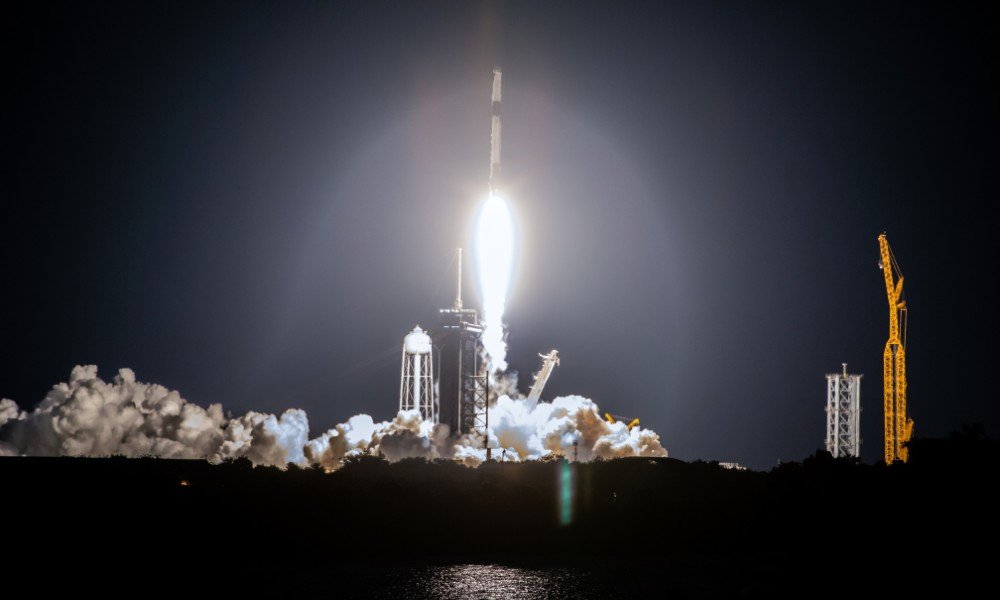
SpaceX is set to release its first quarterly earnings as a publicly traded company on Tuesday, with analysts projecting $6.9 billion in revenue for the first quarter, according to Yahoo Finance. The report comes just two days before the expiration of the post-IPO lockup period on Aug. 6, which could release more than 900 million shares onto the market. Together, these events are likely to shape investor sentiment after a volatile first month of trading.
Shares of the rocket and satellite company surged more than 19% on their Nasdaq debut in late June, briefly pushing the market capitalization above $2 trillion. Since then, the stock has retreated over 23%, bringing the valuation down to approximately $1.43 trillion as of the close on July 31. The upcoming earnings call and lockup expiry could determine whether the selloff deepens or stabilizes.
Andrew Chanin, CEO of ProcureAM, which issues the Procure Space ETF (ticker: UFO), emphasized the significance of Tuesday's report. "This is the first time the company is providing its quarterly earnings since becoming a publicly traded company back at the end of June," he told InvestmentNews. Advisors should scrutinize the results for granular details across SpaceX's business lines, he added.
Starlink and Starship in focus
Investors will be looking for specific metrics from SpaceX's key verticals. For Starlink, that means subscriber numbers and revenue growth. For the launch business, Chanin said, "people are going to want to see any indications of full commercial readiness for Starship." The thirteenth Starship test flight on July 24 successfully deployed 20 Starlink V3 satellites, a milestone that could factor into the company's outlook.
Chanin also noted that following SpaceX's merger with xAI earlier this year, analysts will seek clarity on data center capital expenditures and the net impact on profitability. As of July 31, SpaceX was the seventh-largest holding in the Procure Space ETF.
SpaceXAI and forward guidance
Paul Golding, senior digital infrastructure and payments analyst at Macquarie, said in a note last week that "the recent AI cloud wins are not expected to be fully reflected in 2Q results." He added that "commentary on outlook and news relevant to Launch and Connectivity could be key drivers as well," and that "outlook remarks could help address concerns around execution and AI monetization, with this likely more important than Q2 actuals."
The lockup expiration is another overhang. Chanin posed the key question: "Do the holders of those shares want to sell, or do they hold those shares? Just because the lockup window has expired – does that mean that people are racing to get out or do they have longer term interest in holding onto those shares?" The answer will become clearer after Aug. 6, as reported by Reuters.
Beyond the immediate catalysts, the broader space economy presents a long-term opportunity. McKinsey projects the space economy will grow from $630 billion in 2023 to $1.8 trillion by 2035, encompassing both "backbone" applications like satellites and launch services, and "reach" applications such as ride-hailing, which relies on satellite signals and smartphone chips.
For advisors, the week ahead offers a real-time case study in how post-IPO dynamics—earnings transparency and lockup expirations—can drive volatility. As Morgan Stanley's wealth arm and JPMorgan's trading desk have already shown, the SpaceX IPO has rippled through the financial industry. The company's inclusion in major indices, as BlackRock's new Nasdaq 100 ETF illustrates, adds another layer of relevance for advisors monitoring client portfolios.