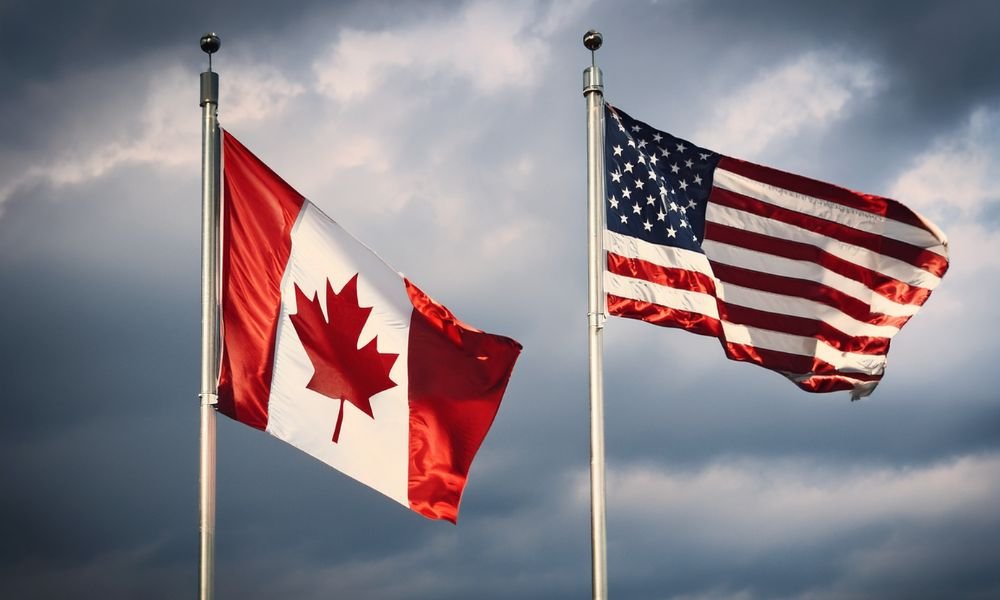
The United States and Canada failed to reach a new trade agreement late Friday, triggering 50% tariffs on roughly $20 billion of Canadian exports and prompting a retaliatory response that economists warn could disrupt cross-border supply chains and dampen business investment on both sides of the border.
Prime Minister Mark Carney suspended negotiations and recalled Canadian trade officials to Ottawa after rejecting what he called "uneconomic" and "unfair" last-minute demands from the Trump administration. "In recent days, the United States proposed new terms that were uneconomic, unfair, and undermined the net benefits for Canada, and called into question the reliability of any deal," Carney told reporters Saturday. "In short, they asked too much, and they offered too little."
The breakdown ends nearly a month of intensive talks and marks a sharp reversal from Tuesday, when President Donald Trump declared on social media that the two countries had reached a deal. Negotiations continued through Friday night, with Canadian officials still inside the U.S. Trade Representative's office past 10:30 pm ET before ultimately walking away.
What fell apart at the finish line
U.S. Trade Representative Jamieson Greer said Canada "declined to finalize the trade deal under the terms agreed earlier this week" and blamed "new demands and walk backs of other commitments by Canada." Greer added that the U.S. had offered "significant tariff reductions on steel, aluminum, autos, and lumber," calling the collapse "a missed opportunity for Canada."
Carney said American negotiators sought, in the final hours, to limit tariff relief to passenger autos, excluding medium and heavy-duty trucks, and introduced restrictions on Canada's ability to sign trade agreements with other countries. They also sought to limit Canadian protections around language and culture, he said, without elaborating. "There wasn't one single thing" that derailed discussions, said Mark Wiseman, Canada's ambassador to the United States. "But as the details became more and more apparent, every one of those details seemed to work against our understanding of what a fair and economic agreement should be."
The economic stakes
The new tariffs, imposed under Section 338 of the Tariff Act of 1930—a provision never previously deployed—hit approximately 5% of Canada's US-bound exports. They cover a broad range of goods including steel, some building materials, plastics, chemicals, forest products, machinery, and consumer items such as hockey sticks and certain clothing.
Robert Kavcic, an economist with BMO Capital Markets, said the tariffs were "digestible" on aggregate, raising the effective US tariff rate on Canadian goods to roughly 7.5% from about 5%. But he cautioned that "trust in the trade relationship is further scarred," compounding already-deteriorating business confidence. Royal Bank of Canada economists estimate the tariffs directly affect about 0.4% of Canada's GDP.
A recent survey by the Canadian Federation of Independent Business found that 40% of exporters sold products that would be subject to the new tariffs, and of those, nearly 80% expected revenue losses. "Many CFIB members have said this will end their US sales, and some have reported this will kill their businesses," said Dan Kelly, the group's chief executive. Canada has recorded five consecutive quarterly declines in business investment, as companies scale back capital expenditure plans amid heightened trade uncertainty.
Retaliation and what comes next
Carney announced Canada will respond with dollar-for-dollar tariffs on US goods, effective September 8, targeting sectors including steel, dairy, appliances, agricultural equipment, pulp and paper, and electronics. He acknowledged the move would "raise costs and reduce choice for Canadians" but said it was in the country's best interests.
The US Chamber of Commerce had warned earlier this week that "higher tariffs would damage both economies, drive up costs for US families, further disrupt critical supply chains, and risk the 13 million American jobs that depend on" the North American trade pact. After the collapse, the Canadian Chamber of Commerce called it "a body blow to North American competitiveness." "Americans will see their costs go up, and Canadians will see customers, investment and small businesses disappear," said Candace Laing, president and CEO of the Canadian Chamber of Commerce.
A structural shift, not just a trade spat
Beyond the immediate tariff math, business leaders are grappling with whether the deterioration of the Canada-US trade relationship signals a structural change that would persist beyond the current administration. "There is a new trade and investment model, one that could well be kept in place by future US administrations whether Democrat or Republican," said Goldy Hyder, president and CEO of the Business Council of Canada.
Carney, meanwhile, has framed the episode as confirmation that Canada must reduce its economic dependence on the United States, a diversification push he launched at the World Economic Forum in Davos in January 2026, where he declared the world was experiencing "a rupture, not a transition." He said Saturday that warning had been borne out. The collapse also raises questions about the upcoming USMCA review, as trade ties resist political winds, and adds to the broader economic pessimism reflected in recent consumer sentiment surveys. For advisors, the episode underscores the need to monitor volatile commodity prices and shifting wealth dynamics as trade uncertainty persists.