Artificial intelligence has moved beyond back-office efficiency in wealth management and is now fundamentally reshaping how firms evaluate acquisition targets, conduct due diligence, and integrate acquired businesses. Industry participants say the pace of this transformation has accelerated markedly in 2026, creating a widening gap between technologically advanced platforms and their less sophisticated peers.
The shift comes amid near-record M&A activity. According to Fidelity's April 2026 Wealth Management M&A Transaction Report, the median deal size reached $950 million in April, up from $584 million the prior month. Private equity-backed buyers participated in 76% of transactions during the period, underscoring the consolidation wave sweeping the industry.
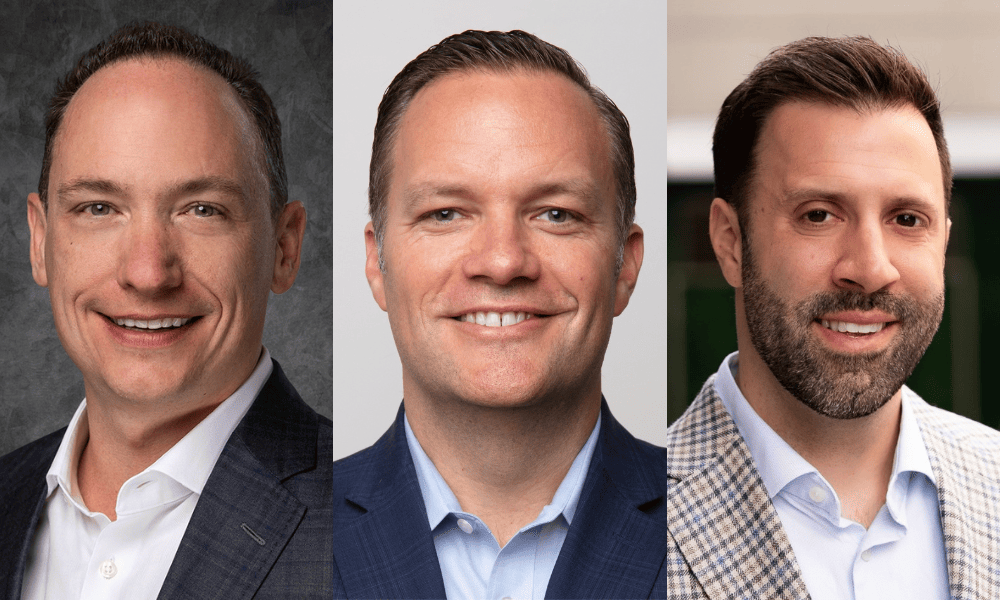
Derek Bruton, managing director and head of M&A at Modern Wealth Management, said AI and modern technology are now embedded across the entire deal lifecycle, from sourcing through integration and client delivery. “The gap between scaled platforms and standalone firms keeps getting wider, and the independents we speak with can feel it,” Bruton said. “Building modern infrastructure, data capabilities, and an integrated client experience from scratch is expensive and hard to get right. That’s what’s driving more M&A.”
Gartner’s Top Strategic Technology Trends for 2026 report indicates that firms embedding agentic AI into their workflows—reducing operational overhead and boosting advisor capacity—are now commanding valuation multiples significantly higher than their less technologically advanced peers. Buyers are increasingly focused on data hygiene and digital client acquisition capabilities, not just EBITDA. Bruton noted that firms are no longer simply deciding whether to sell; they are deciding whether to keep trying to keep up or to plug into a platform already built to win.
For independent advisors weighing strategic options, Bruton cautioned against bolting on AI tools before getting foundational systems in order. “If your core systems don’t talk to each other, layering on AI or anything ‘advanced’ just makes the mess worse,” he said. “The faster path is plugging into a platform that already has this figured out. You skip the trial and error, reduce execution risk, and actually start benefiting from modern tech instead of fighting it.”
RIA M&A activity hit a record high in 2025, with 273 transactions completed by late October, surpassing the prior full-year record of 272 set in 2024, according to DeVoe & Company. The deals were fueled by lower borrowing costs and an acceleration of acquisitions by private-equity-backed platforms in what DeVoe described as “the most dynamic market environment in a decade.” Research from Succession Research Group also highlighted a trend toward larger deals, more complex terms, and rising multiples.
Mike Wilson, CEO and co-founder of wealth management platform Hamachi.ai, sees AI-driven change running in both directions—helping buyers evaluate firms and helping sellers understand and present their own value. Historically, M&A analysis was manual, fragmented, and backward-looking. Today, firms can analyze books of business using modern data infrastructure, dashboards, workflow analytics, and AI-driven insights, examining operational efficiency, advisor behavior, client engagement, and growth opportunities with granularity not possible five years ago.
“What’s often overlooked is that AI isn’t just helping buyers evaluate firms—it’s helping sellers understand and present their own value more effectively,” Wilson said. “Firms can now assemble diligence materials, document institutional knowledge, analyze client relationships, identify growth opportunities, and quantify operational strengths much faster than before, resulting in a more prepared seller and a more efficient transaction process.”
Wilson also pointed to an underappreciated opportunity: firms discovering significant value already sitting inside their existing technology stack. Advisors navigating technology consolidation are increasingly finding that the biggest productivity gains come not from acquiring new applications, but from eliminating manual processes, connecting disconnected systems, and modernizing legacy workflows. “Sometimes the biggest gains don’t come from buying another application,” Wilson said. “They come from eliminating manual processes, connecting disconnected systems, modernizing legacy workflows, and leveraging AI to unlock more value from the tools they already own.”
Wilson sees the industry at a genuine inflection point. The past two decades were defined by asset consolidation; the next decade may be defined by the consolidation of intelligence, workflows, and institutional knowledge. AI is also changing the economics of innovation itself, with significant implications for smaller firms. As the gap widens, firms that fail to adopt modern technology risk being left behind in an increasingly competitive M&A landscape. For more on how platforms are integrating advanced tools, see RFG Advisory Integrates iCapital's Alternatives Platform to Meet Advisor Demand for Private Markets and Morningstar, Perplexity, and Plaid Integrate to Streamline Advisor Research with AI.