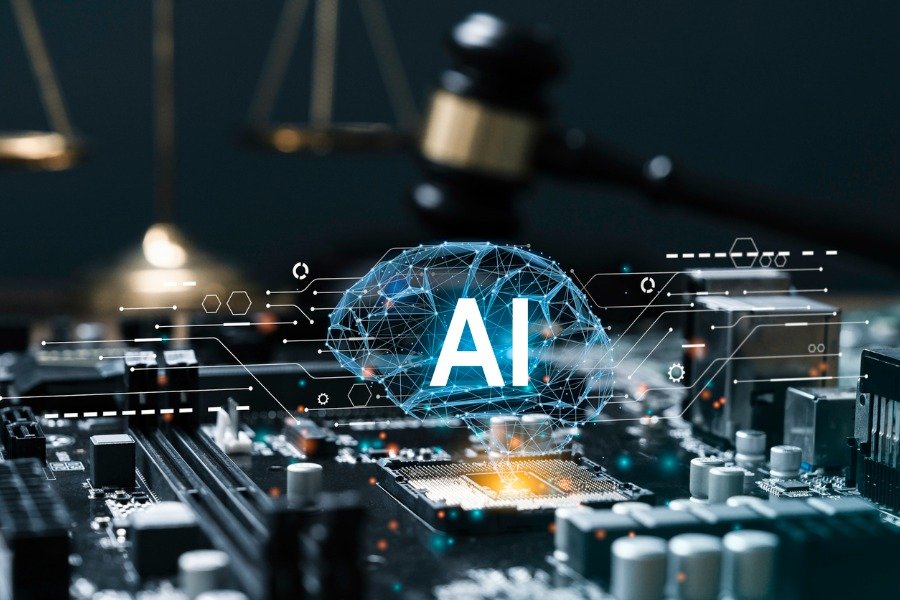
Artificial intelligence is poised to reshape the wealth management industry, potentially pushing human advisors to focus exclusively on high-net-worth clients while technology handles the mass affluent segment. That forecast comes from Debasish Patnaq, a partner at McKinsey & Company, who told Bloomberg that advances in AI are rapidly improving the quality of financial guidance available to investors with more modest assets.
Patnaq argued that AI-driven tools will increasingly handle routine planning and investment decisions, reducing the need for human intervention among mass affluent clients—those with less than $1 million in investable assets. Advisors, he said, will concentrate on wealthier clients, a shift that could fundamentally alter the economics of advisory practices.
The prediction aligns with moves already underway at major firms. T. Rowe Price, in a recent analysis, suggested that AI's real value lies not just in efficiency gains but in redesigning workflows across financial planning, client reviews, communications, and practice management. The firm argued that AI can help advisors expand capacity without adding staff or working longer hours, by handling preparation and analysis while advisors focus on judgment, empathy, and context.
However, the technology also carries risks. Tobias Pross, chief executive of Allianz Global Investors, warned at a media event in Frankfurt last week that widespread reliance on the same large language models could lead investors to reach similar conclusions and execute comparable trades. He described the phenomenon as a form of "AI socialism," where generic chatbot models steer users toward identical investment ideas rather than fostering independent analysis.
Pross cautioned that investment success has historically depended on differentiated views and unique insights. If AI tools increasingly produce homogeneous recommendations for millions of users, investors could become more vulnerable to sharp market reversals when consensus trades unravel, he said.
Technology providers are racing to embed AI into advisor workflows. Salesforce recently launched Agentic Advisor, a suite that automates meeting preparation, note generation, follow-up actions, and client intelligence. Rockefeller Capital Management partnered with Anthropic to integrate Claude into advisor workflows for research and client engagement, viewing AI as a tool to enhance rather than replace advisory relationships.
The industry is also creating new leadership structures around AI. Over the past month, firms including SEI have appointed executives responsible for AI strategy, governance, and data operations, signaling that AI is increasingly viewed as a core business function rather than an experimental technology.
These developments support Patnaq's contention that AI will increasingly handle functions once central to many advisory practices. As software providers automate more of the advisor workflow, the question of who still needs a human advisor becomes more pressing for the mass affluent segment.
For a broader perspective on how AI and other trends are reshaping wealth management, see the EY Report: AI, Wealth Transfer, and Self-Direction Reshape Wealth Management by 2030. Meanwhile, the rise of AI-native firms is challenging traditional providers, as noted in the Morningstar Study Finds Semiliquid Private Market Funds Share Overlapping Holdings, Questioning Diversification Claims.