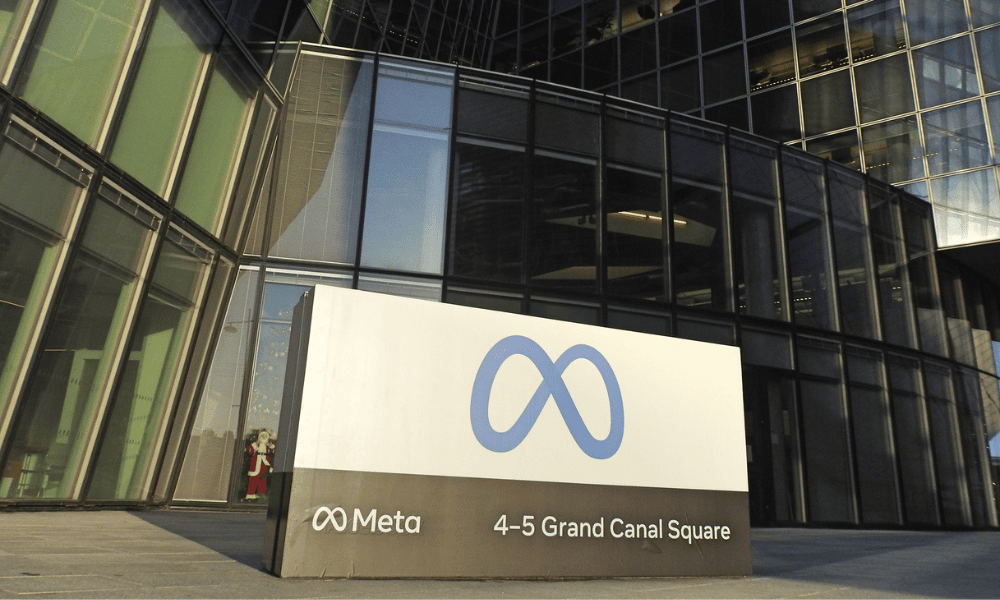
Meta Platforms has unveiled a new class of nonvoting stock that will allow Chief Executive Mark Zuckerberg to sell shares to cover a potential California wealth tax without relinquishing voting control. The arrangement, disclosed Wednesday, comes less than two weeks before voters decide Proposition 40, a one-time 5% levy on residents with a net worth of $1 billion or more.
Under the plan, Meta will issue Class C common stock in January 2027, effectively a two-for-one split for all shareholders. Zuckerberg will be permitted to sell up to 20% of the Class C shares he receives immediately, representing roughly 10% of his economic stake. Because the shares carry no voting rights, his control over the company remains unchanged.
A special committee of Meta's board concluded that retaining Zuckerberg in a leadership role and keeping him based in California was "critically important," citing "unprecedented challenge and competition in our industry" driven by artificial intelligence. The committee's decision reflects the growing pressure on controlled companies to find creative solutions as states explore taxing unrealized wealth.
According to Forbes, Zuckerberg's net worth is approximately $240 billion, which would translate to a $12 billion tax bill under Proposition 40, though the measure's valuation rules could alter the final amount. The deal offers a template for advisors working with founders and holders of concentrated stock: create liquidity while preserving voting power.
Proposition 40 would apply to billionaires who were California residents on Jan. 1, 2026, covering public stock, private business stakes, and venture holdings, but generally excluding real estate, pensions, and retirement accounts. Revenue would fund state healthcare programs to offset cuts tied to the One Big Beautiful Bill Act, signed by President Trump in 2025.
Backers project the measure would raise about $100 billion from the state's 200 to 250 billionaires, while the nonpartisan Legislative Analyst's Office estimates "tens of billions of dollars" over several years. A Hoover Institution study puts the figure at $30 billion but also projects a net present value of negative $38.9 billion once lost income tax from departing billionaires is factored in.
Critics question whether the tax would remain one-time. Alan Auerbach, an economics professor at UC Berkeley, told CNBC, "There is nothing in the proposition to keep the tax from being imposed again in the future, and recent history suggests it will be." Darien Shanske, a UC Davis law professor who helped draft the measure, countered, "It is a one-time tax for a one-time emergency. Any further taxation would need to be voted on again."
Polls show the measure's support has slipped. A September UC Berkeley Institute of Governmental Studies survey found 45% of likely voters in favor, 42% opposed, and 13% undecided, down from a 19-point lead in March. Prediction markets Kalshi and Polymarket put its odds of passage below 30%.
Two rival initiatives on the same ballot could also derail it. Proposition 42 would bar new retroactive taxes on personal assets, while Proposition 41 would void new taxes that breach state spending limits. The Legislative Analyst's Office has said courts could block Proposition 40 if either rival measure receives more "yes" votes. Governor Gavin Newsom, who has split with his own party over the tax, endorsed Proposition 42 on Oct. 9, writing in a June Substack post, "Wealth is movable, and it shops for the state with the lowest taxes."
For advisors, the Meta arrangement underscores the importance of planning for potential state-level wealth taxes. As a Stanford study suggested, such taxes could backfire by driving wealthy residents away, and new millionaires face unique coverage gaps as their wealth grows. The outcome of Proposition 40 will be closely watched by the wealth-management industry.


