Financial advisors seeking to position themselves for the so-called Great Wealth Transfer may want to sharpen their focus on Maine, Hawaii, and Massachusetts. New research from Acuity, a national accounting and advisory firm, shows these states have the highest concentration of wealth held by households headed by someone 65 or older, relative to their total population. That concentration, the firm argues, is a leading indicator of where inheritance-planning demand will be most intense in the coming decades.
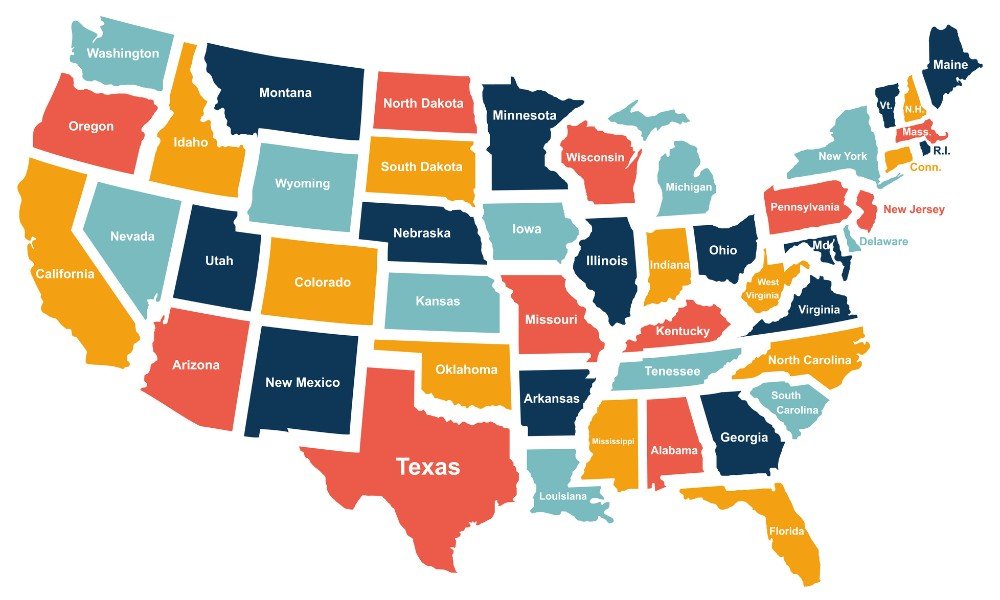
Acuity's analysts examined household financial data to estimate the aggregate wealth of senior-led households in each state, then divided that figure by the state's total population to create a per-resident metric. Maine topped the list with an estimated $225,172 in senior wealth for every resident, followed by Hawaii at $207,338 and Massachusetts at $159,004. The rest of the top ten includes Washington, New Hampshire, Montana, New Jersey, Maryland, Oregon, and Florida.
“Older Americans play an increasingly important role in local economies, from homeownership and consumer spending to charitable giving and family support,” said Matthew May, CPA and accounting services leader at Acuity, in a statement. “These findings highlight where that influence is strongest and where the next generation may experience the largest transfer of wealth in the years ahead.” May's comments underscore the dual significance of the data: not only for estate-planning professionals but also for businesses, housing markets, and community organizations that depend on the spending and investment activity of retirees.
Acuity notes that smaller states dominate the per-capita rankings because they have a high ratio of retirees relative to their overall population. However, the absolute dollar figures tell a different story. California leads the nation with an estimated $4.2 trillion in wealth controlled by its 65-and-older households, a figure that dwarfs every other state. Florida ranks second with $2.64 trillion, while Texas, New York, Illinois, and New Jersey each exceed $1 trillion in senior household wealth.
The concentration of senior wealth in these large states reflects their status as economic and retirement hubs, as well as their sheer population size. Texas, in particular, has drawn attention recently due to the rapid growth of Dallas's financial sector. Data from the Federal Reserve Bank of Dallas show that financial activities in the city now account for a greater share of local employment than they do in New York City, a traditional financial capital. That shift could make Texas an even more attractive market for wealth-management firms looking to serve affluent retirees and their heirs.
For advisors, the implications extend beyond traditional estate planning. The Great Wealth Transfer is not just about passing assets from one generation to the next; it also affects how those assets are managed, invested, and deployed. Heirs may have different priorities than their parents, and firms that can adapt to those preferences—whether through sustainable investing, digital engagement, or structured family meetings—will be better positioned to retain assets across generations. Indeed, a recent BNY Wealth survey found that 53% of ultra-high-net-worth families lack complete wealth transfer plans, highlighting a significant advisory opportunity.
The scale of the transfer is staggering. In 2024, Cerulli Associates projected that $124 trillion in wealth would be transferred from older Americans to younger generations through 2048. That figure, which has become a touchstone in the industry, underscores the urgency for advisors to build multi-generational relationships. As the Acuity data shows, the geographic distribution of that wealth is uneven, and firms that align their business development efforts with the states where senior wealth is most concentrated—both per capita and in absolute terms—may find the most fertile ground.
Acuity's research also serves as a reminder that the Great Wealth Transfer is not solely a private-family matter. The spending and investment decisions of older Americans have outsized effects on local economies, from real estate markets to small-business financing. As wealth moves to younger hands, those patterns may shift, creating both challenges and opportunities for advisors who serve not only individual clients but also the institutions and communities that depend on that capital.