U.S. financial advisors anticipate steady asset growth over the next several years, even as the industry undergoes a structural transformation driven by artificial intelligence and the largest intergenerational wealth transfer in modern history, according to new survey data from Natixis Investment Managers.
The study, which polled 300 U.S.-based advisors as part of a broader survey of 2,950 financial professionals across 23 countries, found that respondents reported a median AUM of $218 million and an average AUM of $5.7 billion. Over the prior 12 months, these advisors posted average asset growth of 12.5%. Looking forward, they expect that pace to moderate to 10.7% over the next year before accelerating to 11.2% annually over a three-year horizon.
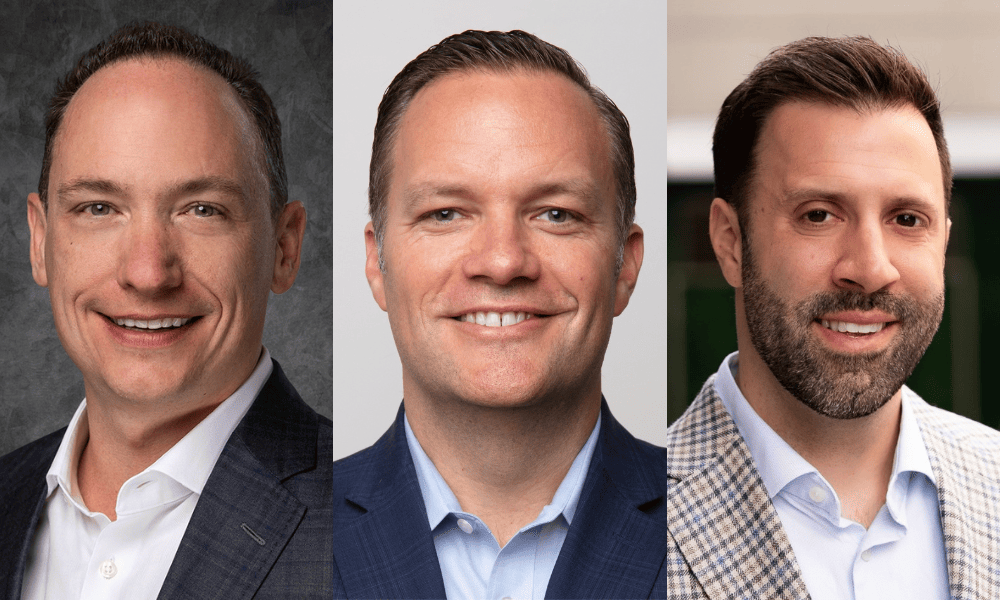
Dave Goodsell, executive director of the Natixis Center for Investor Insight, characterized the findings as evidence that advisors are bracing for a structural reset while navigating near-term market and economic uncertainty. “The immediate priority is helping clients protect portfolios and make sound decisions in a volatile environment,” Goodsell said. “The longer-term imperative is to adapt their businesses for a market where AI-powered tools, next-generation investors, and evolving client expectations redefine the competitive landscape.”
AI Reshapes Competitive Dynamics
A 78% majority of U.S. advisors currently view traditional financial professionals as their primary competition. However, only 26% expect that to hold true in five years, with 35% anticipating that self-directed tools powered by AI will become their greatest competitive threat. Rather than resisting, many advisors are embracing the technology: 70% say AI tools can free up time with clients, 76% believe AI adopters will gain a competitive edge, and two-thirds think the technology could drive market growth over the next two decades. Yet 58% acknowledge that integrating AI into daily workflows has proven more difficult than expected.
Advisors are leaning into personal relationships as a differentiator. Ninety-one percent of U.S. respondents said they emphasize personal accountability when positioning themselves against AI, and only 12% believe the technology will put them out of business—compared with 30% of global advisors. Marina Gross, head of Natixis Investment Managers Solutions, noted that customization is becoming a clearer competitive advantage. She pointed to direct indexing, with 67% of U.S. advisors saying the strategy can help deliver after-tax alpha. For more on how AI and self-direction are reshaping the industry, see the EY Report: AI, Wealth Transfer, and Self-Direction Reshape Wealth Management by 2030.
Generational Wealth Transfer: Risk and Opportunity
The multi-trillion-dollar transfer of assets between generations is no longer a distant planning concern—it is an immediate business challenge. Advisors report retaining a spouse’s assets 75% of the time after a client transition, but that rate falls to 56% for next-generation heirs and drops further to 44% when managing assets for both a parent and a child. Nearly four in ten advisors (39%) say they are increasingly worried about retaining assets through wealth transfer events. Earlier Natixis research found that 41% of U.S. advisors view the great wealth transfer as an existential risk, and nearly half of U.S. investors expecting to inherit wealth say they do not plan to keep their benefactor’s advisor.
The wave of advisor retirements adds further pressure. Seventy-eight percent of U.S. respondents view advisor grey-outs as a significant growth opportunity, even as 65% acknowledge it will widen the advice gap. U.S. advisors appear more optimistic than global peers: only 37% say they are struggling to attract younger advisors, compared with 51% globally. Nearly three-quarters (74%) are focused on proactively capturing next-generation assets through specialized planning services, digital tools, social media prospecting, and hiring younger advisors. More than half (52%) believe next-generation investors will expect access to private markets as table stakes, and 60% anticipate the current administration will clear a regulatory path for defined contribution plans to incorporate private assets within 12 months. For context on retirement plan access trends, see Millennials Retain Retirement Plan Access More Than Boomers After Job Changes, EBRI Data Show.
Market Volatility Tests Client Discipline
In the near term, market volatility is a more immediate concern. Sixty-five percent of U.S. advisors ranked rising geopolitical uncertainty among their top economic worries, and 89% expect further market turbulence as a result. That uncertainty has altered client behavior: 64% of advisors report that many clients want to hold more cash. Advisors describe a delicate balancing act—keeping clients from retreating too aggressively into cash while curbing reactive behavior. The three biggest investment mistakes advisors say clients are making: emotionally reacting to headlines (73%), attempting to time the market (62%), and maintaining unrealistic return expectations (53%). Inflation risk adds to the difficulty, with nearly half of U.S. advisors ranking it among their biggest concerns. For a broader view of market sentiment shifts, see Bearish Sentiment Fades as AI Euphoria and Wealth Concentration Reshape U.S. Equity Markets.