Artificial intelligence is quietly rewriting the staffing calculus at independent wealth management firms across the U.S. A 2024 Society for Human Resource Management study found that 78% of hiring managers expect AI to trigger layoffs of recent graduates, while a 2025 Fidelity survey reported that over two-thirds of wealth management firms are already using generative AI, with half piloting solutions and the other half deploying them at scale. The question is no longer whether AI will change hiring, but which roles it will affect and how quickly.
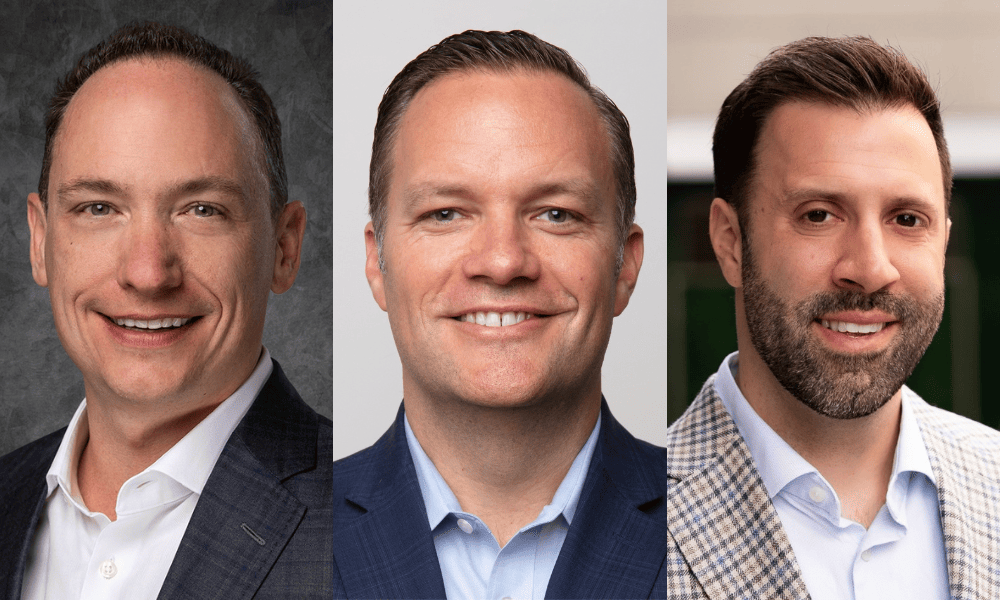
Andrew Mescon, CEO of Ballast Rock Private Wealth, says his firm has formally added AI fluency to its hiring criteria alongside intellectual acumen, character, experience, and cultural fit. “We continue to prioritize the same standards we always have,” Mescon said. “However, we are now also incorporating an individual’s adaptability and openness to the evolving role AI is playing across our industry.” Mescon has not cut back-office staff, viewing their institutional knowledge as mission critical, but he expects to reduce future marketing hires. “I imagine going forward we will be less likely to take on material headcount related to marketing, as many of these functions have proven to be easily replicated by even the most basic AI functionality,” he added. He also flagged a longer-term risk: AI could erode core financial planning workflows, potentially reducing demand for paraplanners and their software platforms.
Blake Butler, founder and CEO of Canterbury Capital Wealth Management, sees AI primarily as an efficiency tool rather than a headcount reduction strategy. He notes that operational tasks—such as processing ACH transfers, changing banking information, resetting passwords, and handling routine account maintenance—are well-suited for automation. Marketing and communications are also increasingly AI-assisted. However, Butler draws a clear line at financial advice. “Clients simply aren’t ready to trust AI alone with major financial decisions,” he said. “They may be comfortable letting AI help complete a transaction, but they still want a trusted advisor guiding them through important planning decisions. I often compare it to robotic surgery—robots assist with surgeries every day, but patients still expect a surgeon in the operating room.” Butler also observes that clients often switch to his firm after frustrating experiences with chatbots and automated systems at other providers. A 2026 Oliver Wyman analysis of wealth management trends confirms that white-glove service is becoming rarer and more explicitly valuable as AI absorbs routine tasks, creating a bifurcated market where human judgment commands a premium.
Ethan Jung, co-founder and CTO of Abundo Wealth, has taken the most aggressive approach. Abundo has never hired for back-office roles; instead, Jung taught himself to code early on and built proprietary tools that automate functions other firms still staff manually. “Our advisors are able to both see more clients and serve them better because so many laborious back-end functions are made into simple, less time-consuming tasks,” Jung said, citing expedited note-taking and follow-up action steps as examples. The Abundo model—advice-only, low-cost, and technology-first—illustrates a path larger firms are increasingly watching. According to a 2026 analysis by Wealth Management magazine, firms with one support hire in 2022 serviced 86 clients and generated $517,500 in revenue; by 2024, similar firms could manage 111 clients and earn $591,000 with the same team, with the gap attributed directly to technology adoption.
Industry surveys reinforce these trends. A HSBC survey found that 57% of affluent investors use AI for research, but 59% still trust human advisors for final decisions. Similarly, a BNY Wealth survey reported that 96% of ultra-high-net-worth investors use AI weekly, yet advisors remain a key human check. These data points underscore that while AI is reshaping operational roles, the demand for trusted human advisors persists.
Together, the three firms point to a consistent conclusion: AI is compressing administrative and marketing headcount, but human judgment, relationships, and financial advice remain firmly beyond its reach for now. As Butler put it, “The balance between automation and relationships is something we manage carefully.”